Table of Contents
- Why Outdoor Furniture Deteriorates Faster in the Sandhills Than Most Places
- The Four Climate Forces Working Against Your Outdoor Furniture
- How Humidity Specifically Damages Each Outdoor Material
- What UV Exposure Does to Outdoor Furniture in Moore County
- The Pine Pollen Factor Nobody Talks About
- How Temperature Swings Affect Outdoor Structures Differently Than Furniture
- Material by Material: How Each One Performs in the Sandhills Climate
- Not Sure Which Material Is Right for Your Specific Backyard?
- What You Can Do Right Now to Extend the Life of What You Have
- Frequently Asked Questions About NC Sandhills Climate and Outdoor Furniture
- Buy Once, Buy Right for the Sandhills Climate
You bought the furniture two summers ago. It looked great in the showroom photo and even better when it arrived.
Now the cushions are fading unevenly. There is a rust ring forming around one of the leg bases. The wood is starting to check along the grain. And the whole thing looks like it has been outside for ten years rather than two.
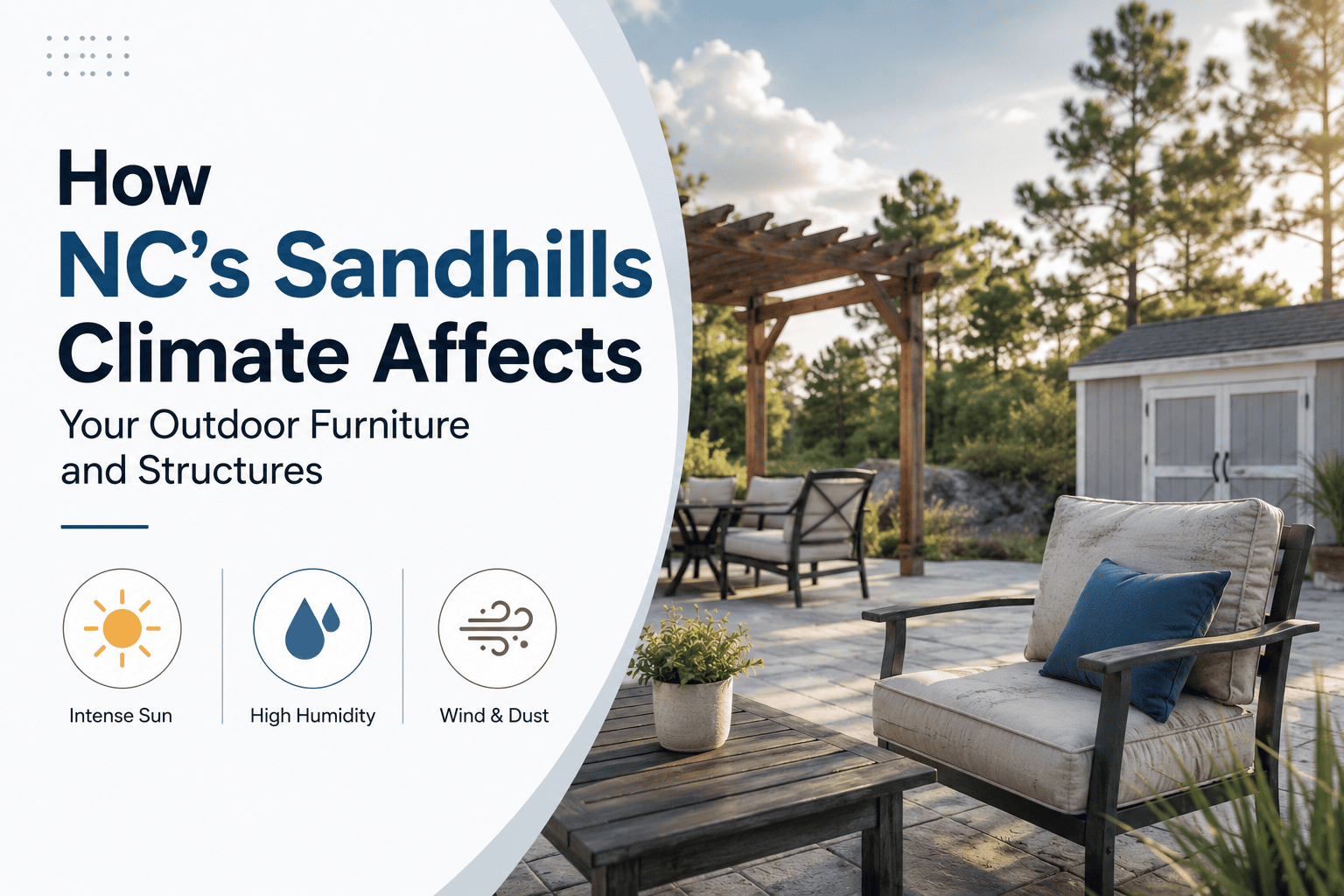
You are not doing anything wrong. Your furniture is doing exactly what most outdoor materials do when exposed to what the NC Sandhills puts them through, which is considerably more than the product was designed to handle in a generic climate.
Understanding what this specific region does to outdoor furniture and structures is the difference between replacing everything every three years and owning pieces that look good in fifteen.
If you want to talk through material options before your next purchase, GreyFox Outdoor’s patio furniture and outdoor structures collections are designed specifically with this climate in mind.
Why Outdoor Furniture Deteriorates Faster in the Sandhills Than Most Places
The Difference Between Coastal NC and Sandhills NC Climate
Most people assume coastal NC is harder on outdoor furniture than inland areas due to salt air. For metal corrosion, that is partially true. But salt air is a single stressor. The Sandhills climate combines multiple high-intensity stressors simultaneously: sustained summer humidity, significant UV intensity, heavy pine pollen deposits, and temperature swings that stress material connections through repeated expansion and contraction.
That combination is why furniture built for a generic outdoor rating underperforms significantly in Moore County compared to what the product specifications would suggest.
Why Two Summers Can Do What Ten Years Does Elsewhere
A resin wicker chair left on a patio in Phoenix might last fifteen years before UV causes visible breakdown. The same chair in Southern Pines may show significant surface cracking within three to four years because moisture infiltrates surface micro-cracks opened by UV, then causes accelerated internal degradation during humidity cycles.
This is not a quality problem with the furniture. It is a climate compatibility problem, and it is entirely preventable once you understand exactly what is happening.
The Four Climate Forces Working Against Your Outdoor Furniture
Force 1: Sustained High Humidity
Summer relative humidity in the Sandhills regularly exceeds 75 to 85 percent from June through August. This is not brief morning moisture that burns off by midday. It is sustained atmospheric moisture that penetrates porous surfaces, keeps fabric damp, promotes mildew growth, and drives corrosion at connection points continuously for three to four months every year.
Force 2: Intense UV Exposure
Moore County’s position in NC provides significant solar intensity from April through September. UV radiation degrades surface coatings, bleaches fabric dyes, embrittles plastic and resin components, and breaks down the protective layers on treated wood faster than the product’s outdoor rating assumes because most outdoor ratings are based on moderate UV environments, not the sustained southern sun exposure the Sandhills receives.
Force 3: Pine Pollen and Organic Debris
The Sandhills pine tree density creates a seasonal pollen event unlike anything most homeowners have experienced in other regions. Every outdoor surface is coated heavily from March through May. That pollen is not just a cosmetic nuisance. It is an organic material that holds moisture against whatever surface it coats, creating localized humidity conditions at the furniture surface even on relatively dry days.
Force 4: Seasonal Temperature Swings
The Sandhills experience meaningful temperature swings from winter lows to summer highs. All outdoor materials expand and contract with temperature change. Furniture frames, pergola connection hardware, and structural fasteners cycle through this expansion-contraction process hundreds of times over a few years. Every cycle is a small stress on every connection point in the structure.
How Humidity Specifically Damages Each Outdoor Material
High sustained humidity damages different outdoor materials in distinct ways. Wood absorbs moisture and swells, leading to checking, splitting, and rot at connection points. Metal corrodes at hardware and joints. Wicker becomes brittle as its coating absorbs moisture over time. Cushion fill and fabric hold moisture and develop mildew. Each material has a different vulnerability profile.
What Humidity Does to Wood and Wicker
Untreated and under-treated wood absorbs atmospheric moisture during humid periods and releases it during drier stretches. This cycling causes the wood fibers to swell and contract repeatedly, which opens surface checks over time and accelerates the deterioration of any protective coating applied over the wood. The base of wooden furniture legs and the points where horizontal members meet vertical ones are especially vulnerable since moisture collects in these joints.
Resin wicker holds up better than natural rattan but the protective coating that gives it its weather resistance degrades under sustained UV and moisture exposure. Once that coating begins to fail, the underlying structure becomes vulnerable.
What Humidity Does to Metal and Hardware
Even stainless steel and powder-coated aluminum are not immune to sustained Sandhills humidity. Lower-grade steel rusts visibly within one to two seasons without adequate coating. Powder-coated aluminum resists rust at the frame level but can show corrosion at drilled connection points and hardware fasteners where the coating is interrupted. Zinc-plated hardware common in budget furniture corrodes within months under sustained moisture exposure.
What Humidity Does to Cushions and Fabric
Outdoor cushion fabric with good water resistance sheds rain effectively but still absorbs atmospheric humidity over extended periods. Fill material that stays damp for days after a rain event becomes a mildew incubator. Mildew staining in cushions is largely cosmetic but a signal that the fill material is staying wet longer than ideal. Outdoor fabrics rated for coastal conditions typically handle Sandhills humidity better than standard outdoor fabric ratings suggest for this region.
What UV Exposure Does to Outdoor Furniture in Moore County
UV radiation from sustained southern sun exposure fades fabric and finishes, embrittles plastic and resin components, and degrades protective surface coatings faster than most outdoor furniture ratings account for. A piece rated for general outdoor use will show significant UV-driven deterioration in the Sandhills within two to three seasons under consistent sun exposure.
Fading: Why Some Materials Lose Color Faster Than Others
Solution-dyed fabrics, where the color is part of the fiber rather than applied to the surface, hold color significantly better under UV exposure than surface-dyed alternatives. This is why two outdoor cushions with the same apparent quality rating can fade at dramatically different rates: the construction method rather than the fiber type determines UV color stability.
Powder coating on aluminum holds its color better than painted finishes when the coating quality is high. Budget powder coats begin to oxidize and chalk within two to three seasons of direct sun exposure in this climate.
Surface Degradation Beyond Just Color Loss
UV breaks down the polymer chains in plastic and resin materials, making them progressively more brittle over time. A resin furniture piece that is flexible and resilient in year one may crack under load in year four because UV has degraded the molecular structure of the material itself, not just its surface appearance. This is the kind of failure that cannot be painted over or refinished. It is a material end-of-life situation.
The Pine Pollen Factor Nobody Talks About
Heavy pine pollen deposits in the NC Sandhills create a surface moisture-retention condition that accelerates damage to outdoor furniture and structures. Pollen coats every horizontal surface from March through May, trapping atmospheric moisture against the furniture surface and creating localized conditions that accelerate mildew growth, surface corrosion, and coating degradation even during periods of otherwise moderate weather.
Why Pine Pollen Is More Than Just a Cleaning Inconvenience
A layer of pine pollen on a wooden furniture surface is effectively a moisture-retaining blanket that keeps the wood surface damp for longer after rain and during morning dew cycles. This extends the surface moisture exposure time well beyond what the furniture would experience if the same weather occurred without the pollen layer.
How Pollen Buildup Accelerates Surface Damage
The organic acids in pine pollen are mildly corrosive to some surface finishes over sustained contact. Combined with the moisture-retention effect, pollen deposits left unaddressed for weeks at a time meaningfully accelerate the deterioration of painted, stained, and coated surfaces compared to the same surfaces in a pollen-free environment.
The Annual Pollen Maintenance Window Every Sandhills Homeowner Should Know
Rinse outdoor furniture thoroughly as soon as heavy pollen deposits are visible, typically starting in late March and again through April. Do not let pollen sit through rain cycles without rinsing. A garden hose rinse after each significant pollen deposit is the single most effective low-effort maintenance action a Sandhills outdoor furniture owner can take.
How Temperature Swings Affect Outdoor Structures Differently Than Furniture
What Expansion and Contraction Does to Pergolas and Pavilions
Outdoor structures made from wood or vinyl experience dimensional changes with every significant temperature shift. A long pergola beam expands in summer heat and contracts on cool nights. Over years of these cycles, the cumulative movement at connection points creates loosening in fasteners, opening of joints, and in wood structures, surface checking along the grain.
This is why annual hardware inspection of pergola and pavilion connection points is a genuine maintenance requirement in the Sandhills rather than an optional precaution.
Why Connection Points and Hardware Fail First
The fasteners and brackets that hold outdoor structures together are almost always the first components to show failure in the Sandhills climate. They cycle through expansion and contraction, they sit in moisture-collecting joints, and they are typically made from materials with different thermal expansion coefficients than the surrounding wood or vinyl. Upgrading to stainless steel hardware at installation significantly extends the time before connection point issues develop.
Material by Material: How Each One Performs in the Sandhills Climate
| Material | Humidity Performance | UV Performance | Pollen Resistance | Maintenance Required |
| Polymer Lumber | Excellent | Excellent | Good | Very Low |
| Powder-Coated Aluminum | Very Good | Very Good | Good | Low |
| Teak | Good | Good | Moderate | Moderate to High |
| Cedar | Moderate | Moderate | Moderate | High |
| Pressure-Treated Wood | Moderate | Moderate | Moderate | High |
| Resin Wicker | Moderate | Fair | Moderate | Moderate |
| Lower-Grade Steel | Poor | Moderate | Poor | Very High |
Polymer lumber is the standout performer for the Sandhills climate. It does not absorb moisture, does not swell or check, resists UV fading significantly better than wood finishes, and cleans easily after pollen deposits with a simple rinse.
Powder-coated aluminum performs strongly across all four climate stress categories when the coating quality is high. It is the best frame material for furniture with cushions since the frame itself requires minimal attention.
Teak retains its natural oil content, which gives it meaningful natural resistance to moisture, but NC humidity and UV still drive graying and surface weathering without regular oiling. Teak in the Sandhills needs more maintenance attention than it would in a drier or less sunny climate.
Cedar and pressure-treated wood are manageable with consistent maintenance but require annual or biannual staining or sealing in the Sandhills to perform acceptably. Without that maintenance, deterioration begins within two to three seasons.
Resin wicker is acceptable in sheltered or covered locations but degrades meaningfully faster under direct sun and rain exposure in this climate compared to more protected environments.
Lower-grade steel corrodes visibly within the first two seasons under Sandhills conditions and is not recommended for outdoor use without exceptional protective coating that is difficult to maintain after any scratching or chipping.
Not Sure Which Material Is Right for Your Specific Backyard?
The right material depends on whether your furniture will be in direct sun or partial shade, how much annual maintenance you are willing to commit to, and what aesthetic you are building toward.
Visit GreyFox Outdoor at 225 W Morganton Rd C, Southern Pines or call +1 910-725-0394 to see material options in person and talk through what fits your specific backyard conditions.
What You Can Do Right Now to Extend the Life of What You Have
The Spring Cleaning Sequence That Actually Matters
Clean all outdoor furniture surfaces thoroughly at the start of spring before pollen season peaks. Apply any protective treatments to wood surfaces before the humidity cycle begins. Inspect all hardware and connection points on structures and tighten anything that has worked loose over winter. Store or cover cushions during extended periods of heavy pollen.
Storage and Cover Decisions That Change Long-Term Outcomes
Quality furniture covers significantly extend the life of cushions and reduce UV exposure on frame finishes during the peak summer months when the furniture is not in use for extended periods. Even a week of covered storage during a rainy stretch makes a meaningful difference in cushion mildew accumulation.
When Maintenance Can Save It and When It Is Time to Replace
If a wood frame is checking or cracking at surface level but structurally sound, refinishing can reset the surface protection meaningfully. If checking has penetrated to the joint level or rot is present at connection points, the structural integrity is compromised and refinishing is a cosmetic fix for a structural problem. At that point, replacement with a more climate-appropriate material is the better investment.
For a complete breakdown of which materials perform best in North Carolina’s specific conditions, our guide on polymer lumber vs aluminum vs teak and what actually lasts in North Carolina goes into full detail on each material’s long-term performance profile.
Frequently Asked Questions About NC Sandhills Climate and Outdoor Furniture
How does NC humidity affect outdoor furniture?
NC Sandhills humidity above 75 to 85 percent during summer months penetrates porous surfaces, promotes mildew growth on fabric and cushions, drives corrosion at metal connection points, and causes wood to swell and contract repeatedly, opening surface checks and degrading protective coatings faster than most outdoor furniture ratings account for in moderate climate environments.
What outdoor furniture material lasts longest in the NC Sandhills?
Polymer lumber consistently outperforms all other material categories in the Sandhills climate due to its complete moisture resistance, strong UV stability, and easy maintenance under pine pollen conditions. Powder-coated aluminum frames are a strong second choice for furniture with cushions. Both materials require significantly less maintenance than wood alternatives in this environment.
How does pine pollen affect outdoor furniture in NC?
Pine pollen deposits coat outdoor surfaces from March through May, trapping moisture against furniture surfaces and creating conditions that accelerate mildew growth, surface corrosion, and coating degradation. Rinsing furniture regularly during pollen season is the most effective low-effort maintenance action for Sandhills homeowners.
What is the best pergola material for the NC Sandhills climate?
For minimal long-term maintenance in the Sandhills, vinyl or composite pergola materials outperform wood due to their resistance to the humidity, UV, and temperature swing combination that drives wood deterioration. Our detailed vinyl vs wood pergola comparison for the NC Sandhills covers this decision specifically.
How often should I seal or stain outdoor wood furniture in NC?
Wood outdoor furniture in the NC Sandhills typically needs staining or sealing every one to two years depending on sun exposure and whether the piece is covered or uncovered. South and west-facing exposures with direct afternoon sun require more frequent application than shaded or covered pieces.
Buy Once, Buy Right for the Sandhills Climate
The Sandhills climate is not forgiving to the wrong material choices. But it is very manageable for homeowners who buy with local conditions in mind rather than relying on general outdoor ratings that were never calibrated for this specific combination of humidity, UV, pine pollen, and temperature swings.
GreyFox Outdoor helps Southern Pines, Pinehurst, and Moore County homeowners choose outdoor furniture and structures that actually last in this climate, not just look great in the showroom photo.
Visit us at 225 W Morganton Rd C, Southern Pines, NC 28387, call +1 910-725-0394, or browse our outdoor structures and polymer aluminum collections to find pieces built for the environment you actually live in.
Buy it once. Buy it right. Still love it in fifteen years.