Table of Contents
- Why This Decision Matters More in the Sandhills Than Anywhere Else
- Wood Pergolas: What You Get and What Happens Over Time in NC
- Vinyl Pergolas: The Aesthetic Reality and What Modern Vinyl Actually Looks Like
- Side-by-Side Comparison: Maintenance, Lifespan, and Cost
- 10-Year Cost of Ownership: The Number Nobody Else Shows You
- Not Sure Which Material Fits Your Specific Backyard?
- Which One Wins in the NC Sandhills?
- When Wood Still Makes Sense
- When Vinyl Is the Clear Choice
- Frequently Asked Questions About Vinyl vs Wood Pergolas in NC
- Find Your Pergola in Southern Pines
You want a pergola. You have narrowed it down to vinyl or wood. One feels more authentic. One sounds more practical. And every comparison guide you have read gives you the same noncommittal answer that leaves you exactly where you started.
The problem is that most of those guides are written for a generic American backyard, not a backyard in Moore County, where summer humidity sits above 80 percent for months, UV intensity bakes every outdoor surface from May through September, and pine pollen coats anything left untreated.
In a climate like the NC Sandhills, the pergola material decision is not academic. It is financial. Choose the wrong material and you are staining, sealing, or replacing within a few years. Choose the right one and you get a decade of low-effort enjoyment.
This guide gives you the honest answer for this specific climate.
If you want to see structure and material options in person before deciding, GreyFox Outdoor’s outdoor structures collection is available right here in Southern Pines.
Why This Decision Matters More in the Sandhills Than Anywhere Else
The Three Climate Forces That Stress Pergola Materials in Moore County
The NC Sandhills puts outdoor structures through a combination of stressors that most of the country simply does not experience at the same intensity simultaneously.
Humidity. Summer relative humidity in the Southern Pines and Pinehurst area regularly exceeds 80 percent from June through August. That sustained moisture level penetrates untreated wood fibers, accelerates rot at connection points, and creates ideal conditions for mildew growth on any surface that is not actively maintained.
UV intensity. NC’s summer sun is intense enough to visibly fade stained and painted wood within two to three seasons without annual reapplication. Surfaces facing south or west bear the brunt of this exposure year after year.
Pine pollen and organic debris. Moore County’s pine tree density means rooflines and horizontal surfaces collect heavy pollen deposits every spring. That organic material traps moisture against wood grain, accelerating the same deterioration processes that humidity drives.
Why National Comparison Guides Get This Wrong
A vinyl versus wood comparison written for the general US market typically mentions “humidity climates” as a footnote. In the Sandhills, humidity is not a footnote. It is the dominant variable that determines which material choice holds up and which one becomes a recurring maintenance burden.
Wood Pergolas: What You Get and What Happens Over Time in NC
What a New Wood Pergola Actually Looks Like
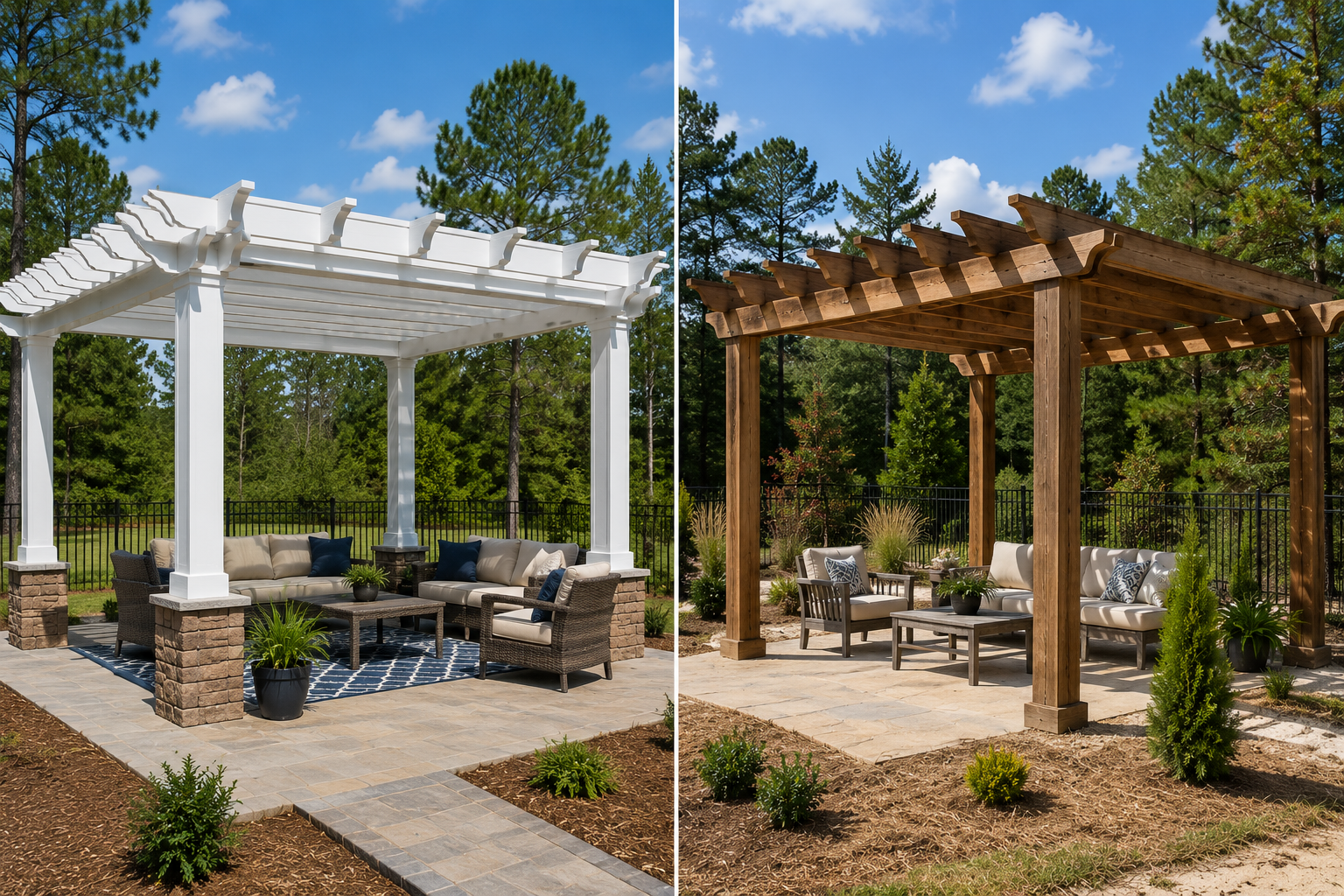
A freshly installed cedar or pressure-treated wood pergola is genuinely beautiful. The natural grain, warm color, and authentic character of real wood are difficult to replicate in any manufactured material. In the first season, a wood pergola looks exactly like the photos that made you want one in the first place.
What NC Humidity and UV Does to Wood Over 3 to 5 Years
This is where the Sandhills climate becomes a significant factor. Without consistent annual maintenance, untreated or under-treated wood in this environment begins to show visible deterioration within two to three seasons. Cedar grays and develops surface checking. Pressure-treated lumber can develop deep surface cracks as it cycles through wet and dry seasons. Connection points where horizontal beams meet vertical posts are especially vulnerable to moisture infiltration and rot.
By year five without consistent sealing, even high-quality wood pergola structures in Moore County often show visible weathering, discoloration, and in some cases structural softening at connection points.
The Real Maintenance Commitment of a Wood Pergola in Southern Pines
A wood pergola in the Sandhills realistically requires:
- Annual cleaning to remove pollen, mildew, and surface debris
- Reapplication of stain, sealer, or paint every one to two years depending on sun exposure
- Periodic inspection and treatment of connection points and post bases where moisture collects
- Occasional sanding of rough or splitting surfaces before reapplication
This is entirely manageable, but it is a real time and material commitment that compounds over the years.
Vinyl Pergolas: The Aesthetic Reality and What Modern Vinyl Actually Looks Like
Does Vinyl Look Cheap? The Honest Answer
This is the question most buyers are actually asking, and most guides avoid answering directly. The honest answer is: it depends on the product and the installation quality.
Budget vinyl pergola kits sold through national big box retailers can look exactly as plastic and artificial as the concern suggests. They flex visibly in the wind, develop a slightly glossy surface that reads as synthetic from a distance, and do not age in the natural way that wood does.
Premium vinyl pergola systems are a different product entirely. Thicker wall construction, wood-grain texture embossed into the surface, and more sophisticated profile shapes bring modern vinyl significantly closer to the appearance of painted wood. From a normal viewing distance, a well-specified vinyl pergola with a wood-grain finish is not immediately identifiable as vinyl.
How Modern Vinyl Pergola Design Has Changed
The vinyl pergola market has changed substantially in recent years. Products that were once limited to white or beige smooth profiles now include multiple profile shapes, wood-grain textures in multiple stain colors, and construction weights that eliminate the flexibility and lightness that made earlier vinyl feel insubstantial.
What Vinyl Cannot Replicate About Natural Wood
Honesty matters here. Close-range inspection of vinyl reveals a texture that reads as manufactured rather than organic. The natural variation in grain, the deepening patina of aged wood, and the tactile quality of real timber are not achievable in vinyl at any price point. For buyers where the authentic character of wood is a primary priority, this distinction genuinely matters.
Side-by-Side Comparison: Maintenance, Lifespan, and Cost
Maintenance Requirements Compared
| Factor | Wood Pergola | Vinyl Pergola |
| Annual cleaning | Required | Soap and water rinse |
| Staining or sealing | Every 1 to 2 years | Never required |
| Paint touch-up | Every 2 to 4 years | Not applicable |
| Rot inspection | Annual | Not required |
| Mildew treatment | As needed | Occasional rinse |
Expected Lifespan in NC Sandhills Conditions
A properly maintained wood pergola in the Sandhills can last 15 to 25 years. The emphasis is on properly maintained. Without consistent annual attention, visible deterioration begins within 3 to 5 years and structural concerns can emerge within 7 to 10 years.
A quality vinyl pergola in the same conditions has an expected lifespan of 20 to 30 years with minimal intervention. Vinyl does not rot, does not absorb moisture, does not require sealing, and is not affected by UV exposure in the way wood stain and paint are.
Upfront Cost Comparison
Quality wood pergolas for a standard residential backyard in the Southern Pines area typically range from $3,000 to $8,000 installed depending on size and wood species. Comparable quality vinyl structures run $4,000 to $10,000 installed. Vinyl generally costs more upfront while costing significantly less over time in maintenance.
10-Year Cost of Ownership: The Number Nobody Else Shows You
A wood pergola in the NC Sandhills typically costs $1,200 to $2,500 more in total maintenance over 10 years compared to a comparable vinyl pergola, when accounting for annual staining and sealing materials plus periodic labor. The lower upfront cost of wood does not always translate to lower total ownership cost over a decade.
Wood Pergola 10-Year Total Cost
A mid-range wood pergola installed at $5,000 with annual maintenance costs of $150 to $300 per year in materials and occasional professional touch-up produces a 10-year total of approximately $6,500 to $8,000 for a homeowner doing most of the maintenance themselves.
Vinyl Pergola 10-Year Total Cost
A comparable vinyl pergola installed at $6,500 with maintenance costs limited to periodic washing produces a 10-year total of approximately $6,700 to $7,000, essentially the cost of installation.
What the Numbers Actually Mean for Your Decision
At the 10-year mark, the total ownership cost difference between the two materials is often smaller than the upfront price difference suggests. For buyers who plan to stay in their home long-term and value low-maintenance outdoor living, vinyl frequently represents better value over the ownership period despite higher initial cost.
Not Sure Which Material Fits Your Specific Backyard?
Backyard orientation, existing aesthetic, budget timeline, and how much time you genuinely want to spend on annual maintenance all factor into the right choice for your specific property.
Visit GreyFox Outdoor at 225 W Morganton Rd C, Southern Pines or call +1 910-725-0394 to walk through the options with our team before committing to either material.
Which One Wins in the NC Sandhills?
The Climate Verdict
For the specific combination of humidity, UV intensity, and organic debris that defines the NC Sandhills climate, vinyl is the more practical material choice for most homeowners. It does not rot, does not require annual sealing, does not fade in the way painted or stained wood does, and maintains its structural and visual integrity for significantly longer in this environment without intervention.
The Practical Verdict
For a homeowner who wants a structure they can genuinely set up and enjoy without annual maintenance obligations, vinyl wins in this climate. For a homeowner who genuinely values the authentic character of natural wood and is committed to the maintenance schedule it requires, wood remains a legitimate and beautiful choice.
When Wood Still Makes Sense
Wood is still the right material for certain Southern Pines and Pinehurst properties and certain buyers.
If you are placing the pergola in a consistently shaded location that reduces UV and humidity stress significantly, wood’s durability disadvantage narrows meaningfully. If your property has an existing aesthetic built around natural wood elements that vinyl simply cannot match convincingly, the maintenance commitment may be worth it for visual continuity. And if you genuinely enjoy the seasonal upkeep process and view staining your pergola as part of owning a home rather than a burden, wood delivers an authenticity that vinyl cannot replicate.
For more on structure types and how material choice factors into the broader decision, our guide on pergola vs gazebo vs pavilion for NC communities is worth reviewing alongside this one.
When Vinyl Is the Clear Choice
Vinyl is the clearly better choice in several specific situations that are common among Moore County homeowners.
If you want a structure that requires nothing beyond an annual rinse to stay looking good for the next 20 years, vinyl delivers that. If you are planning to sell your home within the next five to ten years and want an outdoor structure that holds its appearance without active upkeep from a new owner, vinyl removes the maintenance variable entirely. If you have experienced the deterioration cycle of a wood structure in NC before and have no interest in repeating it, vinyl removes the problem at its source.
For homeowners building a full outdoor living space around the pergola, the low-maintenance nature of vinyl pairs naturally with polymer lumber furniture that carries the same durability advantages. Our comparison of polymer lumber vs aluminum vs teak in NC conditions covers that parallel decision with the same level of detail.
Frequently Asked Questions About Vinyl vs Wood Pergolas in NC
Which lasts longer, a vinyl or wood pergola in NC?
In the NC Sandhills climate, a quality vinyl pergola typically outlasts a wood pergola by 5 to 10 years without maintenance intervention. A properly maintained wood pergola can match vinyl’s lifespan, but this requires consistent annual staining or sealing that many homeowners underestimate when making the initial purchase decision.
Does a vinyl pergola look cheap?
Budget vinyl pergola products can look artificial, but premium vinyl systems with wood-grain textures and heavier wall construction are genuinely difficult to distinguish from painted wood at normal viewing distances. The quality difference between entry-level and premium vinyl is significant and worth understanding before dismissing the material entirely.
How much maintenance does a wood pergola need in NC?
A wood pergola in the NC Sandhills realistically requires annual cleaning, staining or sealing every one to two years, and periodic inspection and treatment of connection points. Without this maintenance cycle, visible deterioration begins within three to five seasons in the Sandhills climate.
Is vinyl or wood pergola more expensive?
Wood pergolas typically cost less upfront, but vinyl pergolas often cost less over 10 years when annual maintenance materials and labor for wood are factored in. The gap between total ownership costs over a decade is often smaller than the initial price difference suggests.
Can a vinyl pergola be painted or stained?
Generally no. Vinyl is manufactured with color integrated into the material and is not designed to accept paint or stain. This means the color you choose at purchase is the color it stays, which is a relevant consideration if you anticipate wanting to change the aesthetic of your outdoor space over time.
What wood species holds up best for a pergola in NC humidity?
Cedar is generally considered the best performing natural wood for outdoor structures in humid NC climates due to its natural rot resistance. Pressure-treated lumber is more affordable and performs acceptably when properly maintained, but typically shows more surface checking over time than cedar in the Sandhills environment.
Find Your Pergola in Southern Pines
The right pergola material for your Moore County property depends on your honest answer to one question: how much time do you want to spend maintaining it over the next decade?
If the answer is as little as possible, vinyl is your material. If you genuinely value natural wood and will commit to the maintenance it requires in this climate, wood remains a beautiful and legitimate option.
GreyFox Outdoor helps Southern Pines and Pinehurst homeowners find outdoor structures built for how they actually want to live outside, with materials that match both the NC climate and their real maintenance expectations.
Visit us at 225 W Morganton Rd C, Southern Pines, NC 28387, call +1 910-725-0394, or browse our outdoor structures collection to see your options before making any commitment.
The right pergola is the one you are still enjoying in ten years without regret.