Table of Contents
- North Carolina Backyards Demand More From Outdoor Structures
- The Quick Answer: Core Differences at a Glance
- The Pergola: Style, Flexibility, and Filtered Shade
- The Gazebo: Intimate, Enclosed, and Garden-Ready
- The Pavilion: The Entertainer’s Structure for NC Living
- Full NC Comparison: Pergola vs. Gazebo vs. Pavilion
- Before You Build in NC: What Most Guides Don’t Tell You
- What Does an Outdoor Structure Cost in North Carolina?
- Which Structure Is Actually Right for You?
- Why NC Homeowners Choose GreyFox Outdoor
- Frequently Asked Questions
North Carolina Backyards Demand More From Outdoor Structures
You finally decide to build your dream backyard. You pick a structure, invest thousands of dollars, and two summers later it looks tired, warped, or just wrong for how you actually use your space.
It happens more than you think.
North Carolina is not a forgiving place for outdoor structures. You get long, humid summers, unpredictable afternoon thunderstorms, and winters that can surprise you. The wrong structure in this climate is not just an aesthetic mistake. It is a costly one.
That is exactly why choosing between a pergola, a gazebo, and a pavilion deserves more than a quick Google search. Each one is built differently, performs differently in NC weather, and suits completely different lifestyles.
At GreyFox Outdoor, we have helped hundreds of North Carolina homeowners navigate this exact decision. This guide gives you everything you need to choose confidently.
The Quick Answer: Core Differences at a Glance
What is the difference between a pergola, gazebo, and pavilion?
A pergola has an open lattice or slatted roof that provides partial shade. A gazebo is a freestanding structure with a solid roof and partially enclosed sides. A pavilion has a full solid roof with completely open sides, making it the largest and most weather-protective of the three.
| Feature | Pergola | Gazebo | Pavilion |
| Roof Type | Open / Slatted | Solid | Solid |
| Rain Protection | Minimal | Good | Excellent |
| Sides | Fully Open | Partial / Screened | Fully Open |
| Best For | Style + Partial Shade | Intimate Retreat | Entertaining + Full Cover |
| NC Climate Rating | Moderate | Good | Excellent |
| Typical Shape | Rectangle | Octagon / Square | Rectangle |
| Avg NC Cost | $3,000-$12,000 | $5,000-$15,000 | $8,000-$30,000+ |
The Pergola: Style, Flexibility, and Filtered Shade
What Makes a Pergola a Pergola?
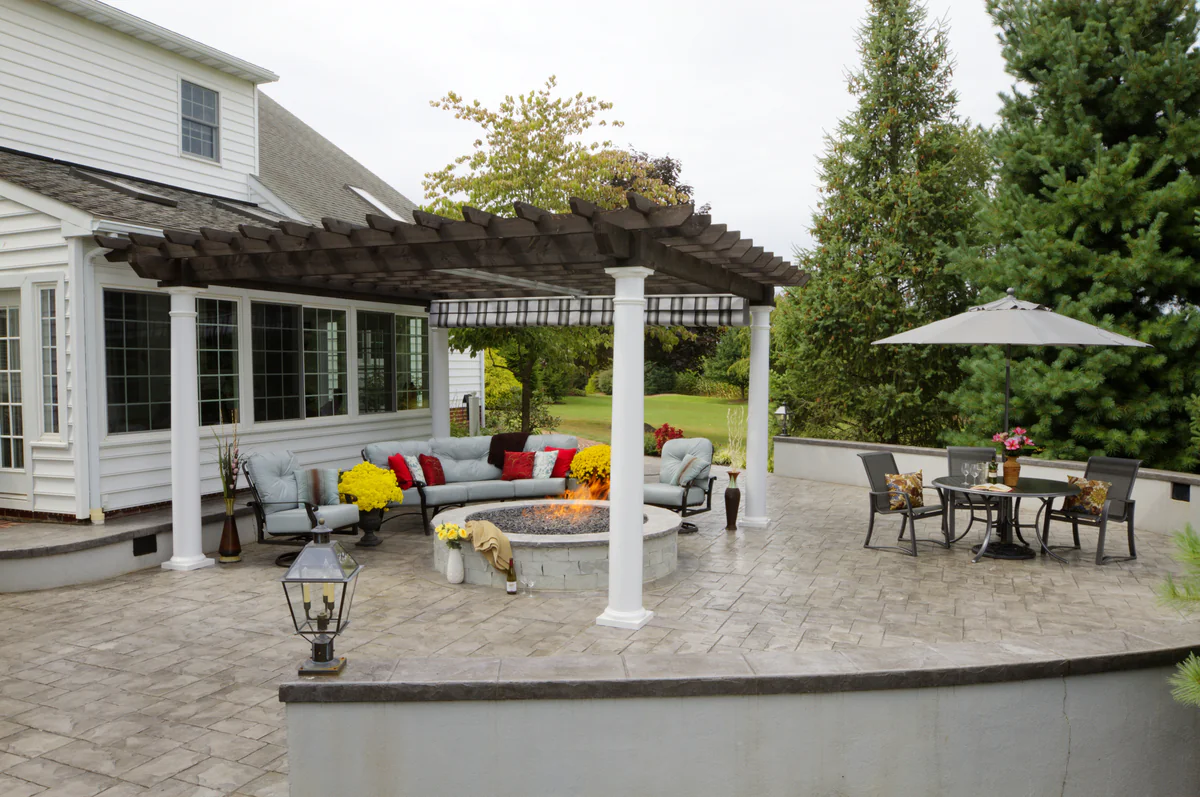
A pergola is an outdoor structure built from vertical posts that support a series of open crossbeams or slats overhead. There are no solid walls and no complete roof. What you get is a defined outdoor space with filtered light, natural airflow, and a lot of design freedom.
Modern pergolas can include retractable canopies, louvered roofs, and built-in lighting. They attach to your home or stand independently in your yard.
Where Do Pergolas Work Best in NC Backyards?
Pergolas shine in specific situations:
- Over a patio or deck directly attached to your house
- Beside a pool where airflow matters more than full coverage
- As a defined outdoor dining or lounge area
- In gardens where climbing plants like wisteria or jasmine can grow through the frame
How Do Pergolas Handle NC Heat, Humidity, and Rain?
This is where honesty matters. A standard pergola will not keep you dry in a Carolina downpour. The open roof design lets rain through. In a state where summer storms roll in fast and hard, that is a real limitation.
However, a louvered pergola changes the game significantly. Adjustable louvers let you tilt the roof to block the afternoon sun, then open it back up when the air cools. Closing them during a quick storm keeps your furniture and guests protected.
If you love the aesthetic of a pergola but want weather flexibility, a motorized louvered pergola is the smarter NC investment.
Cedar vs. Vinyl Pergolas: Which Holds Up Better in the Southeast?
Both are solid choices, but they serve different priorities.
Western red cedar is naturally resistant to moisture, rot, and insects. It handles NC humidity well, looks beautiful, and ages gracefully. It requires periodic sealing but rewards you with warmth and character that vinyl simply cannot match.
Vinyl or PVC pergolas need almost zero maintenance. No painting, no staining, no worrying about moisture damage. If low upkeep is your top priority, vinyl is worth the consideration.
At GreyFox Outdoor, we stock Amish-crafted pergolas in both cedar and vinyl so you can make the right call for your specific situation. Browse our outdoor structure collection to see your options.
The Gazebo: Intimate, Enclosed, and Garden-Ready
What Makes a Gazebo a Gazebo?
A gazebo is a freestanding structure, typically octagonal or square, with a solid peaked roof and partially open sides. Many gazebos include built-in railings, optional screens, and sometimes a raised floor. The solid roof is what separates a gazebo from a pergola immediately.
The result is a cozy, defined outdoor room that feels separate from the rest of your yard.
Where Do Gazebos Work Best in NC Backyards?
Gazebos are ideal when you want:
- A private retreat tucked into a garden corner
- A shaded seating area away from the main house
- A screened space to enjoy evenings without fighting mosquitoes
- A beautiful focal point that elevates your landscape design
Think of a gazebo as your backyard escape pod. It is where you go to unwind with a book, enjoy a quiet dinner, or create an intimate setting for small gatherings.
Gazebo Durability in NC’s Hot and Humid Summers
The solid roof is a major advantage in NC. It blocks direct sun effectively and handles light-to-moderate rain without issue. Screened gazebos take that further by creating a bug-free zone during those warm Carolina evenings when mosquitoes are relentless.
Quality materials matter here. Our Amish-built gazebos use premium cedar and vinyl options that resist warping, fading, and moisture damage far better than big-box alternatives.
Is a Gazebo the Right Size for Your Space?
Gazebos work best on medium-sized lots where you have room to create a destination point away from the house. If your backyard is compact, a gazebo can feel crowded. If your primary need is large-group entertaining, a gazebo may simply be too small for the job.
The Pavilion: The Entertainer’s Structure for NC Living
What Makes a Pavilion a Pavilion?
A pavilion is a large, open-sided structure with a solid roof supported by sturdy posts. No walls. No enclosed sides. Just clean, open sightlines in every direction with full overhead protection above.
Most pavilions are rectangular or square. They sit on an existing concrete pad, deck, or patio base. The solid roof means serious rain protection without the enclosed feeling of a gazebo.
Where Do Pavilions Work Best in NC Backyards?
Pavilions are built for lifestyle. They work best:
- Over a large patio or outdoor dining area
- As a pool-side structure for shade and shelter
- As an outdoor kitchen or grilling hub
- For homeowners who regularly host large groups
- As a year-round outdoor living room that handles NC seasons
Why Is the Pavilion the Most-Requested Structure We Build in NC?
After years of installing outdoor structures across North Carolina, the pavilion consistently wins for one simple reason: it solves the biggest NC problem.
You want to be outside. NC summers are beautiful. But the heat, the sudden afternoon rain, and the blazing sun make untreated outdoor spaces uncomfortable by noon.
A pavilion gives you full shade, full rain protection, and completely open sides that keep the breeze moving. You are outside without being punished by the elements.
Homeowners in Southern Pines, Pinehurst, and across the Sandhills region gravitate toward pavilions because they extend usable outdoor time dramatically, from a few months to nearly the full year.
A-Frame vs. Traditional Pavilion Roof: What Is the Difference?
An A-frame pavilion has a steep, peaked roof on two sides that creates a sharp ridge at the top. It sheds rain quickly and adds dramatic visual height to your backyard. A traditional flat or low-pitch roof sits more modestly and works well in tighter spaces.
Both are excellent in NC. The A-frame edges ahead in heavy-rain performance due to its steeper pitch and faster drainage. Browse our pavilion gallery to see real builds across NC.
Full NC Comparison: Pergola vs. Gazebo vs. Pavilion
| Factor | Pergola | Gazebo | Pavilion |
| Rain Protection | Low (better with louvers) | Moderate | High |
| Heat and Shade | Partial | Full | Full |
| Airflow | Excellent | Good | Excellent |
| Privacy | Low | High | Low |
| Entertaining Capacity | Medium | Small Groups | Large Groups |
| NC Permit Likelihood | Lower | Moderate | Moderate to High |
| Maintenance Level | Moderate | Moderate | Low to Moderate |
| Best NC Use | Patio / Pool | Garden / Retreat | Outdoor Living / Hosting |
Before You Build in NC: What Most Guides Don’t Tell You
Do You Need a Permit for a Pergola, Gazebo, or Pavilion in NC?
In most NC municipalities, structures over a certain size or those attached to your home require a building permit. Freestanding structures under 12×12 feet may fall below the permit threshold in some counties, but rules vary by location.
Always check with your local municipality before breaking ground. Permit requirements in Raleigh, Charlotte, Southern Pines, and smaller NC towns are not identical.
HOA Approval: What to Know Before You Commit
If you live in an HOA community, get written approval before selecting your structure. HOAs often regulate height, materials, color, and placement. The good news is that Amish-crafted structures from GreyFox Outdoor are well-received by HOA review boards because of their quality appearance and clean design.
One of our Southern Pines customers waited several weeks for HOA approval on a mailbox shelter. Planning ahead saved the project from costly delays.
Setback Rules, Soil Anchoring, and Wind Load in the Carolinas
NC setback requirements dictate how far your structure must sit from property lines. This varies by county and zoning classification. Additionally, NC structures need proper ground anchoring to handle wind events, particularly in coastal or open areas. Post depth, concrete footings, and bracket hardware all matter here.
This is exactly where working with a licensed NC installer like GreyFox Outdoor protects your investment. We pull permits, navigate setbacks, and anchor structures correctly the first time.
What Does an Outdoor Structure Cost in North Carolina?
Pergola Cost in NC
A basic wood or vinyl pergola starts around $3,000 to $5,000 installed. Mid-range cedar pergolas with customization run $6,000 to $12,000. Louvered or motorized pergola systems push higher depending on size and features.
Gazebo Cost in NC
Entry-level gazebos start near $5,000 installed. Quality cedar or vinyl gazebos with screening and railings fall between $8,000 and $15,000. Custom or larger footprints climb above that range.
Pavilion Cost in NC
Pavilions carry the widest price range. A standard pavilion installs between $8,000 and $18,000. Larger A-frame cedar pavilions with electrical, fans, and finishing details can reach $25,000 to $30,000 or more depending on the build.
What Drives the Price Up and What Is Worth It?
The biggest cost drivers are material quality, size, roof complexity, and add-ons like lighting or fans. Choosing certified Amish-crafted cedar over imported kit lumber is always worth it in NC. The durability difference over 10 years is significant.
Which Structure Is Actually Right for You?
Choose a Pergola If:
- You want to define a patio space with style
- Your primary goal is aesthetics and partial shade
- You like the idea of growing climbing plants over your structure
- You want a lower starting investment
- You do not need full rain protection
Choose a Gazebo If:
- You want a private retreat away from the main house
- Mosquito protection and enclosed comfort matter to you
- You host small, intimate gatherings
- You want a garden focal point with complete overhead cover
Choose a Pavilion If:
- You host large groups regularly
- You want year-round outdoor usability in NC weather
- Full rain protection is non-negotiable
- You are building an outdoor kitchen, dining room, or entertainment space
- You want the best return on your outdoor investment
Still Not Sure? Ask Yourself This One Question
“How many people do I want to seat comfortably and how much NC weather do I want to fight?”
If the answer is more than eight people and none, the pavilion wins every time. If you want a cozy solo retreat, the gazebo earns it. If style and flexibility matter most, the pergola is your starting point.
Still thinking it through? Visit our showroom at 225 W Morganton Rd C, Southern Pines, NC, call us at 910-725-0394, or explore our full outdoor structures collection.
Why NC Homeowners Choose GreyFox Outdoor
GreyFox Outdoor was built on one belief: North Carolina homeowners deserve outdoor structures that actually last.
Founded by Sam and Betty, both raised in Lancaster County, Pennsylvania, GreyFox has deep direct relationships with some of the finest Amish craftsmen in the country. That means every pergola, gazebo, and pavilion we sell is built with premium-grade western red cedar, pressure-treated yellow pine, or high-quality vinyl. No imported kits. No cutting corners.
We are a licensed NC contractor. We have pulled permits across Moore County and beyond. We have built structures in HOA communities, poolside, on hillside lots, and over patios that needed new footprints. We do not just sell structures. We help you choose the right one, handle the build, and make sure it is standing strong for generations.
You can also browse our patio furniture collection to complete your outdoor living space once your structure is in place.
Frequently Asked Questions
Can a pergola withstand NC storms?
A standard open-roof pergola will not keep you dry in heavy NC rain. However, a louvered or canopy pergola with proper anchoring handles light-to-moderate storms well. For full rain protection in NC’s climate, a pavilion or gazebo is a stronger choice.
Do I need a building permit for a gazebo in North Carolina?
Most NC municipalities require a permit for permanent outdoor structures, especially those over 144 square feet or attached to a home. Requirements vary by county and city. Always contact your local building department before construction begins.
What is the most popular outdoor structure in NC?
Based on our builds across North Carolina, the pavilion is the most requested structure. Its solid roof, open sides, and large entertaining capacity match NC’s outdoor lifestyle and weather patterns better than any other option.
How long does a cedar pavilion last in the South?
A properly maintained western red cedar pavilion lasts 20 to 30 years or more in the Southeast. Cedar’s natural oils resist moisture, insects, and rot. Periodic sealing every two to three years extends its life and keeps it looking sharp.
What is the difference between an attached and freestanding pergola?
An attached pergola connects directly to your home and shares a wall or roofline. A freestanding pergola stands independently anywhere in your yard. Attached pergolas are easier to access but typically require a building permit in NC since they become part of the home structure.
Is a gazebo or pavilion better for a pool area in NC?
A pavilion is generally the better choice for pool areas in NC. Its open sides allow maximum airflow and sightlines across the water, while the solid roof provides shade and rain protection for furniture and guests. Gazebos work well near a pool but tend to feel more enclosed.
Ready to stop second-guessing and start building? The GreyFox Outdoor team is ready to walk you through every option, every material, and every detail specific to your NC backyard.
Get Your Free Estimate Today or stop by our showroom at 225 W Morganton Rd C, Southern Pines, NC 28387. You can also reach us directly at 910-725-0394. Let us help you build something that lasts.