Table of Contents
- Why Choosing a Playset in NC Is Different
- Step 1: Measure Your Backyard the Right Way
- Step 2: Match the Playset to Your Child’s Age
- Step 3: Choose the Right Material for NC’s Climate
- Step 4: Pick the Right Features Without Overspending
- Step 5: Installation, Surfacing, and NC Permits
- What Does a Playset Actually Cost in NC?
- The GreyFox Outdoor Difference
- Your Pre-Buy Checklist
- Frequently Asked Questions
Picture this. It’s a Saturday morning in July. Your kids are inside on their tablets while your backyard sits completely empty. You know a playset would change that, but every guide you find talks about Colorado winters or California sunshine. Nothing speaks to your yard in North Carolina.
That’s exactly the problem this guide solves.
NC backyards have their own rules. The humidity is relentless. The soil is heavy with clay. Yards across the Piedmont and Sandhills roll and slope in ways that catch first-time buyers completely off guard. A playset that works great in Michigan can warp, mold, and splinter right here in Southern Pines within two summers.
This guide is built specifically for NC families. By the end, you will know exactly what material to choose, what size fits your yard, and what features are actually worth paying for in 2026.
Why Choosing a Playset in North Carolina Is Different
Most national buying guides treat a backyard as a flat, neutral space. NC backyards are anything but.
North Carolina sits in a high-humidity zone where summer temperatures regularly push past 90°F and rainfall keeps the air thick from April through October. That combination destroys cheap materials fast. Untreated pine swells, splinters, and rots. Metal hardware rusts. Low-quality vinyl warps under direct sun.
On top of that, NC soils, especially the red clay common across the Piedmont and Sandhills, shift seasonally. A playset anchored poorly in clay soil can tilt or loosen within a year.
Then there are the yards themselves. Unlike the flat suburban lots common in the Midwest, many NC properties slope, especially in communities around Southern Pines, Pinehurst, and the Charlotte metro. That slope changes which playset designs are even safe to install.
If you want a deeper look at how NC’s outdoor environment affects long-term material performance, our guide on poly lumber vs aluminum vs teak outdoor furniture in North Carolina covers the climate science in detail.
Step 1: Measure Your Backyard the Right Way
Before you browse a single playset, measure your usable outdoor space. This single step eliminates half of all buyer regret.
The Consumer Product Safety Commission (CPSC) recommends a minimum safety zone of 6 feet on every side of a playset. That means a playset that is 12 feet long and 10 feet wide actually needs a footprint of at least 24 feet by 22 feet to be safe.
Many NC families underestimate this. They measure the playset, not the play zone, and end up with a structure crammed against a fence or overhanging a garden bed.
If your yard is sloped:
This is where NC gets specific. A slope of more than 6 inches across the play area is considered unsafe for standard playset installation without leveling. You have two practical options:
- Choose a Castle-style playset designed with adjustable leg heights for uneven terrain
- Level a section of your yard with compacted fill before installation
Do not skip this step. A tilted playset puts uneven stress on joints and increases fall risk significantly.
Step 2: Match the Playset to Your Child’s Age
The best playset is not the biggest one. It is the one built for your child’s current age and the next five years of growth.
Toddlers and Preschoolers (Ages 2 to 4)
At this age, safety and accessibility matter most. Look for:
- Low deck heights (under 4 feet)
- Wide, grippy stairs instead of ladders
- Belt swings with full back support
- Enclosed spaces like small playhouses that build confidence
Avoid tall climbing walls or overhead monkey bars. They are frustrating and unsafe for small hands.
Elementary-Age Kids (Ages 5 to 10)
This is the sweet spot for playset investment. Kids this age want challenge, speed, and variety. Look for:
- Rock walls and rope ladders
- Wave or tube slides
- Trapeze bars and monkey bars
- Tire swings or disc swings
Multi-Age Families
If you have a toddler and a 7-year-old, go modular. A modular system lets you start with toddler-safe features and add challenging components as your younger child grows. It is a smarter long-term investment than buying two separate playsets.
Step 3: Choose the Right Material for NC’s Heat and Humidity
For North Carolina backyards, cedar is the most recommended playset material because it naturally resists moisture, rot, and insects without chemical treatments.
This is the most important decision you will make, and NC’s climate makes it clear-cut.
Cedar: The NC Gold Standard
Western red cedar contains natural oils that repel moisture, resist fungal decay, and deter insects, including the termites common in central NC. It does not require chemical treatment to perform well outdoors. With basic annual maintenance like light sanding and resealing, a cedar playset can last 15 to 20 years in a North Carolina backyard.
The CPSC specifically recommends cedar as the structural base for residential playsets. That is not a coincidence.
Pressure-Treated Pine: Know the Tradeoffs
Pressure-treated pine is cheaper upfront and widely available. The chemicals used to treat it have improved since the arsenic-based formulas of the 1990s, but some parents still prefer to avoid direct skin contact with treated wood on play surfaces.
Where pressure-treated pine makes sense: buried ground contact posts or structural bases hidden from play contact. Where it does not make sense: handrails, platforms, and surfaces your kids touch all day.
Vinyl and Poly: Zero Maintenance, Higher Investment
Vinyl and poly playsets are the “set it and forget it” choice. They do not warp, rot, or require staining. They hold color well even under NC’s intense summer sun. The tradeoff is a higher upfront cost and limited customization compared to wood.
For families who want absolutely no maintenance responsibility, vinyl is worth the premium.
NC Climate Comparison Table
| Material | NC Humidity Resistance | Maintenance | Lifespan in NC | Safety |
| Cedar | Excellent | Low (annual seal) | 15 to 20 years | High |
| Pressure-Treated Pine | Moderate | Medium | 10 to 15 years | Moderate |
| Vinyl / Poly | Excellent | None | 20 to 30 years | High |
| Generic Pine | Poor | High | 5 to 8 years | Lower |
Step 4: Pick the Right Features Without Overspending
More features do not mean more fun. The right features for your yard size and kids’ ages do.
Must-Have Features
- Coated or galvanized steel hardware (bare steel rusts fast in NC humidity)
- Adjustable swing beam height for multi-age use
- Canopy or shade cover (NC summers are brutal, and shade extends outdoor play time by hours)
- Solid wood decking with no gaps larger than 3.5 inches for toddler safety
Nice-to-Have Add-Ons
- Sandbox beneath the deck
- Steering wheel or activity panel for younger kids
- Rope bridge between platforms
What to Skip for Small Yards
If your usable play zone is under 400 square feet, skip dual-tower designs and oversized spiral slides. They look impressive in the showroom but overwhelm a compact space and reduce usability.
Features that actually add resale value to your NC home include quality cedar construction, professional installation documentation, and a clean, neutral design that complements your landscaping. If you are thinking about how your outdoor space works as a whole, check out our piece on pergola vs gazebo vs pavilion for NC communities for ideas on combining structures.
Step 5: Installation, Surfacing, and NC Permits
Professional installation in NC typically costs between $200 and $600 depending on playset complexity and site conditions. It is almost always worth it.
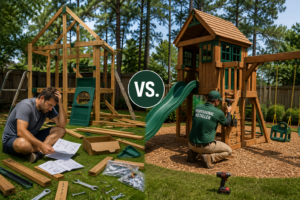
DIY installation is possible, but NC’s clay soil and sloped terrain make it genuinely harder than in other states. Improperly anchored playsets are one of the leading causes of playset-related injuries. If you go DIY, rent a post-hole digger and use concrete anchoring on all four corners minimum.
Best Safety Surfacing for NC Soil
The surface under your playset matters as much as the structure itself. Top choices for NC conditions:
- Engineered wood fiber: Affordable, drains well, CPSC-compliant to 12 inches depth
- Rubber mulch: More expensive but lasts longer and handles NC rain without washing away
- Sand: Budget-friendly but requires frequent raking and refilling after heavy rain
Avoid bare grass. It compacts quickly and offers no meaningful fall protection.
Do You Need a Permit for a Playset in NC?
Most residential playsets in North Carolina do not require a permit. However, this varies by county and HOA. In communities around Southern Pines and Pinehurst, HOA guidelines often dictate setback distances, height limits, and even color requirements. Always check with your HOA before purchasing.
What Does a Quality Playset Actually Cost in NC? (2026 Pricing)
Expect to invest between $800 and $6,000 for a quality backyard playset in North Carolina, with most NC families landing in the $1,500 to $3,500 range.
| Tier | Price Range | What You Get |
| Budget | $500 to $1,500 | Basic swing and slide, limited lifespan |
| Mid-Range | $1,500 to $4,000 | Cedar build, multiple features, modular options |
| Premium | $4,000 and up | Full custom, cedar or vinyl, professional install included |
Hidden Costs NC Parents Often Overlook
- Site preparation and leveling: $150 to $500
- Safety surfacing materials: $200 to $800
- Professional installation: $200 to $600
- Annual maintenance (staining, hardware check): $50 to $150 per year
For a full breakdown of what drives playset pricing in NC, read our dedicated post on how much a backyard playset costs in NC in 2026.
The GreyFox Outdoor Difference: Built for NC Backyards
GreyFox Outdoor is not a national big-box brand guessing at what works in your region. We are based right here at 225 W Morganton Rd, Southern Pines, NC, and every recommendation we make is shaped by the specific realities of NC’s climate, terrain, and communities.
Our team walks through your yard, understands the slope, the soil, the shade patterns, and your kids’ ages before making a single recommendation. We carry outdoor structures, furniture, and play systems built to last in NC specifically, not just sold here.
You can explore our full range of outdoor structures and products or browse our customer galleries to see completed installations in NC backyards similar to yours.
Ready to talk through your space? Call us at 910-725-0394 or stop by our Southern Pines showroom. We will make the decision simple.
Your Pre-Buy Checklist Before You Order Any Playset in NC
Use this before you finalize any purchase:
- Measured total safety zone (not just playset footprint)
- Checked for slope and planned leveling if needed
- Matched features to youngest and oldest child’s age
- Chosen a humidity-resistant material (cedar or vinyl for NC)
- Confirmed all hardware is galvanized or stainless steel
- Selected appropriate safety surfacing for NC rainfall
- Checked HOA rules and county permit requirements
- Reviewed total cost including installation and surfacing
- Confirmed warranty covers outdoor weather conditions
Frequently Asked Questions
What is the best playset material for North Carolina’s humidity?
Cedar is the best material for NC backyards. Its natural oils resist moisture, rot, and termites without chemical treatment, making it the safest and most durable option for NC’s hot, humid summers. Vinyl is a strong second choice for families who want zero maintenance.
How much space do I need for a backyard playset in NC?
You need at least 6 feet of clear safety zone on every side of the playset. A standard mid-size playset requires a total footprint of roughly 22 by 24 feet, including the safety buffer. Measure before you shop.
How long does a cedar playset last in North Carolina?
With basic annual maintenance such as light sanding and resealing, a quality cedar playset lasts 15 to 20 years in North Carolina’s climate. Vinyl playsets can last even longer, up to 25 to 30 years, with virtually no maintenance.
Is a permit required for a playset in North Carolina?
Most residential playsets in NC do not require a building permit. However, HOA rules in communities like Southern Pines, Pinehurst, and Cary often include setback and height restrictions. Always confirm with your HOA before purchasing.
Cedar vs pressure-treated: which is safer for kids?
Cedar is safer for kids because it uses no chemical treatments to achieve rot resistance. Pressure-treated pine relies on chemical preservatives that some parents prefer to avoid on surfaces children touch directly. For platforms, handrails, and play surfaces, cedar is the recommended choice.
What age is a playset appropriate for?
Most playsets are designed for children ages 2 through 10. Toddler-focused sets work well for ages 2 to 4. Feature-rich systems with climbing walls and monkey bars are ideal for ages 5 to 10. Modular systems grow with your child and are the best investment for families with multiple ages.
Choosing the right playset for your NC backyard is one of those decisions that pays off every single day for years. When you match the right material to NC’s climate, the right features to your kids’ ages, and the right size to your actual yard, you end up with a space that gets used constantly instead of collecting spiderwebs.
GreyFox Outdoor is here to make that decision straightforward. Whether you are just starting to research or ready to order, visit our Southern Pines showroom or call us at 910-725-0394. Let’s build something your kids will still be talking about at 15.