Table of Contents
- What “Amish-Crafted” and “Imported” Really Mean
- Where the Money Goes: A Price Breakdown
- Materials: Poly Lumber, Resin, Wicker, and Wood
- Hardware and Construction: The Hidden Quality Signal
- How Each Holds Up in North Carolina Weather
- Not All Imported Furniture Is the Same
- Cost Per Year: The Real Price Comparison
- How to Spot Quality in the Showroom
- Is Amish-Crafted Furniture Worth It for You?
- See the Difference in Person
- Frequently Asked Questions About Amish-Crafted vs Imported Outdoor Furniture
- Invest in Outdoor Furniture That Lasts With GreyFox Outdoor
Steve stood in the GreyFox showroom, staring at a price tag on an Adirondack chair.
“I saw one that looks almost exactly like this online for a third of the price,” he said.
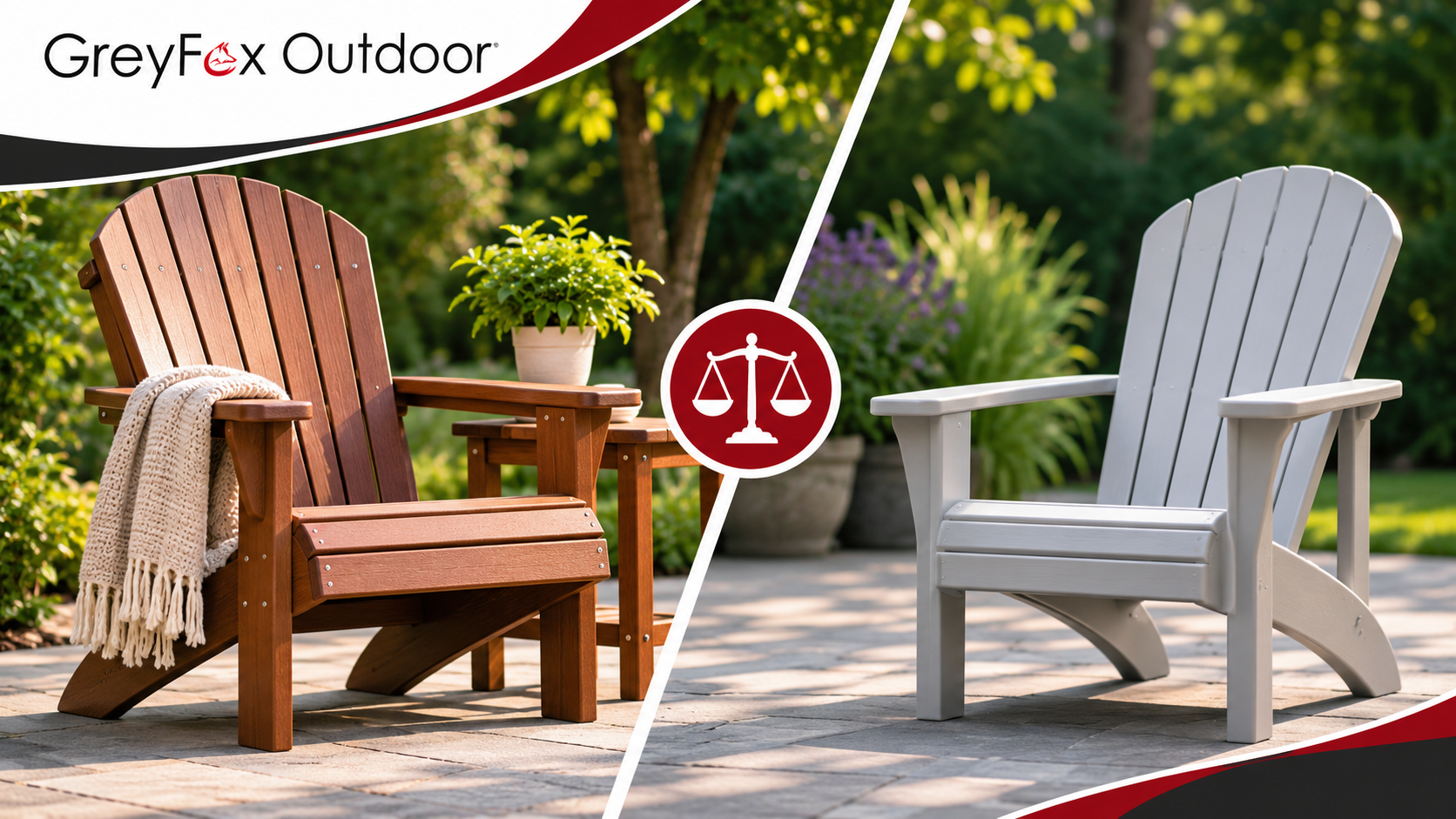
He wasn’t wrong. From across the room, the two chairs looked similar. Same shape. Similar color. Both claimed to be “built for the outdoors.”
Then he picked one up. It was heavy and solid. He ran his hand along the edges. Smooth. He checked the screws. Stainless steel.
He thought about the chair he’d bought online two summers ago. The one sitting behind his shed now, faded to a chalky gray, with rusty bolts and a cracked armrest.
“Okay,” he said. “So what exactly am I paying for?”
That’s the right question. And it’s the one most furniture shoppers never get a clear answer to.
This guide explains Amish-crafted vs imported outdoor furniture in plain English. You’ll learn where the money goes, how materials and hardware compare, how each holds up in North Carolina weather, and how to spot real quality before you buy.
Want to see the difference in person? Call GreyFox Outdoor at (910) 725-0394.
What “Amish-Crafted” and “Imported” Really Mean
Amish-crafted outdoor furniture is built by Amish craftspeople, usually in American workshops, often using poly lumber or wood and traditional building methods. Imported outdoor furniture is made overseas and ranges widely in quality, from budget resin sets to premium teak. The label alone doesn’t guarantee quality, so materials and construction matter most.
Amish-Crafted Outdoor Furniture
Many Amish workshops build outdoor furniture from poly lumber, a heavy, weather-resistant material often made from recycled plastics. Pieces are typically assembled by hand with careful attention to joints, edges, and hardware.
Imported Outdoor Furniture
Imported furniture covers a huge range. Some are mass-produced quickly to hit low price points. Some are made with excellent materials and craftsmanship.
That’s why “imported” doesn’t automatically mean poor quality, and “Amish-style” doesn’t automatically mean Amish-made.
Watch Out for “Amish-Style” Labels
Some products borrow the look without the craftsmanship. Ask where and how a piece was made, not just what it’s called.
For a broader comparison of build methods, read our guide on Amish-made vs factory-made outdoor furniture.
Where the Money Goes- A Price Breakdown
The price of outdoor furniture reflects materials, hardware, labor, finishing, warranty support, and shipping. Amish-crafted furniture often costs more because it uses heavier materials, corrosion-resistant hardware, and skilled hand assembly. Budget imported furniture often saves money by using thinner materials, cheaper hardware, and faster production.
| Cost Factor | Amish-Crafted (Typical) | Budget Imported (Typical) |
| Material | Thick poly lumber or quality wood | Thin resin, steel, or soft wood |
| Hardware | Stainless steel or aluminum | Zinc-plated or basic steel |
| Labor | Skilled hand assembly | Fast production lines |
| Finish | Color-through material or careful finishing | Surface paint or coatings |
| Warranty | Often longer, backed by builder or dealer | Often short or limited |
| Support | Local dealer service | Online-only returns |
Why Lower Prices Can Hide Higher Costs
A lower price usually means something was trimmed. Sometimes it’s material thickness. Sometimes it’s hardware. Sometimes it’s both.
Those savings often show up later as rust, cracks, wobble, or fading.
Curious about typical price ranges? See our guide to outdoor furniture cost.
Materials- Poly Lumber, Resin, Wicker, and Wood
Poly lumber is a dense, weather-resistant material often used in Amish-crafted furniture and is commonly made from recycled plastics. Budget imported resin is usually thinner and lighter. Imported wicker and wood vary widely in quality. In humid North Carolina, dense, moisture-resistant materials typically last longer with less maintenance.
Poly Lumber
Poly lumber, often made from high-density polyethylene (HDPE), is heavy and moisture-resistant. Many manufacturers use recycled plastic, like milk jugs, to make it.
It doesn’t need painting or sealing, and it won’t rot like untreated wood.
Budget Resin and Plastic
Thin resin chairs are lightweight and cheap. But they can become brittle, fade, and crack after years of sun.
Wicker
All-weather wicker can be comfortable and stylish. Quality depends on the weave material and the frame underneath. Cheap wicker may unravel or fade quickly.
Wood
Quality hardwoods like teak can last for years with care. Softer, untreated woods often struggle with moisture and insects.
For a deeper material comparison, read poly lumber vs aluminum vs teak in NC.
Hardware and Construction: The Hidden Quality Signal
Hardware is one of the best ways to judge outdoor furniture quality. Stainless steel and aluminum hardware resist rust, while cheaper hardware can corrode quickly in humid weather. Construction details like joint strength, brace placement, and smooth edges also show how carefully a piece was built and how well it will hold up.
Why Hardware Fails First
Bolts, screws, and brackets take constant stress. In humid climates, cheap hardware can rust and loosen. Once that happens, chairs wobble and joints weaken.
Many quality builders use stainless steel or aluminum hardware for this reason.
What Good Construction Looks Like
- Tight, solid joints with no gaps
- Braces under seats and tabletops
- Smooth, rounded edges
- Consistent spacing between slats
- No sharp burrs or rough cuts
The Weight Test
Heavier furniture often signals denser material and sturdier construction. It also stays put better on breezy patios.
How Each Holds Up in North Carolina Weather
North Carolina’s heat, humidity, sun, pine pollen, and summer storms are tough on outdoor furniture. Dense, moisture-resistant materials with corrosion-resistant hardware generally hold up best. Thin resin, untreated wood, and cheap metal hardware are more likely to fade, crack, rust, or loosen over time.
Heat and Sun
Strong UV exposure fades colors and weakens thin plastics. Look for materials designed to resist UV damage.
Humidity and Rain
Moisture rusts cheap hardware and rots soft woods. Poly lumber and quality aluminum resist moisture far better.
Pine Pollen
Each spring, yellow pollen coats everything in the Sandhills. Smooth, solid surfaces wipe clean easily.
Wind and Storms
Heavier pieces stay in place better during summer thunderstorms and windy days on open lots.
Not All Imported Furniture Is the Same
Imported outdoor furniture ranges from low-cost, short-lived sets to high-quality pieces made with premium materials. Budget imports often cut costs on materials and hardware. Premium imports, such as quality teak, can last for years. The key is judging each piece by its materials, hardware, construction, and warranty, not just where it was made.
Budget Imports
These are often sold online or at big-box stores. They can be fine for short-term use, but many aren’t built for years of North Carolina weather.
Mid-Range Imports
Some mid-range pieces use decent aluminum frames or better weaves. Quality varies by brand.
Premium Imports
High-end imported teak and designer collections can be excellent. They usually cost more and may need regular maintenance.
American-Made Alternatives
If you prefer furniture made in the USA, American manufacturers like Woodard and Telescope Casual offer long-standing domestic options alongside Amish-crafted poly furniture.
Ask our team which GreyFox collections are Amish-crafted and which are American factory-made.
Cost Per Year- The Real Price Comparison
The fairest way to compare outdoor furniture is cost per year of use. Divide the price by how many years it lasts. A cheaper set replaced every few seasons can cost more over time than a higher-quality set that lasts many years. Lower maintenance and fewer replacements add even more value.
A Simple Example
The numbers below are hypothetical and for illustration only.
| Option | Purchase Price | Years of Use | Cost Per Year |
| Budget imported set | $600 | 3 | $200 |
| Higher-quality set | $2,400 | 15 | $160 |
In this example, the more expensive set costs less per year, and saves the hassle of shopping, hauling, and replacing.
Don’t Forget Hidden Costs
- Replacement shipping and disposal
- Touch-up paint or sealing
- Replacement cushions or hardware
- Time spent shopping again
Warranties Matter Too
A strong warranty can protect your investment. Review our poly patio furniture warranty and outdoor furniture warranty information for details by brand.
How to Spot Quality in the Showroom
To spot quality outdoor furniture, check its weight, hardware, joints, edges, color consistency, and warranty. Sit in it, lift it, and press on joints. Quality pieces feel solid, use corrosion-resistant hardware, show smooth finishing, and come with clear warranty terms from a trusted dealer.
Your Quality Checklist
- Lift it. Is it heavy and solid?
- Check the hardware. Is it stainless steel or aluminum?
- Press on joints. Do they feel tight?
- Run your hand along the edges. Are they smooth?
- Look at the color. Is it consistent throughout?
- Sit in it. Is it comfortable and stable?
- Ask about the warranty. What’s covered, and for how long?
- Ask where it’s made. Get a clear answer.
Ask the Right Questions
A knowledgeable dealer should explain materials, construction, and warranty clearly. If answers feel vague, keep looking.
See styles and colors before you visit with our patio furniture color options and outdoor furniture gallery.
Is Amish-Crafted Furniture Worth It for You?
Amish-crafted outdoor furniture is often worth it for homeowners who want durable, low-maintenance pieces built to handle years of weather. Budget imports may make sense for short-term needs or tight budgets. The best choice depends on how long you plan to use the furniture, your climate, and how much maintenance you want.
It’s Often Worth It If You:
- Plan to stay in your home for years
- Want low-maintenance furniture
- Are tired of replacing faded or rusted sets
- Live in a humid, sunny climate like the Sandhills
- Value craftsmanship and local support
A Budget Option May Make Sense If You:
- Need furniture for a short-term rental or temporary setup
- Plan to move soon
- Want a quick, low-cost solution for occasional use
See the Difference in Person
Photos can’t show weight, hardware, or how a chair feels when you sit in it. Seeing furniture side by side makes the difference clear.
Visit GreyFox Outdoor at 225 W Morganton Rd, Suite C, in Southern Pines. Explore our polymer and aluminum collections, deep seating collections, and chaise lounges and Adirondacks. Request a quote or call (910) 725-0394.
Frequently Asked Questions About Amish-Crafted vs Imported Outdoor Furniture
Why is Amish-crafted outdoor furniture more expensive?
Amish-crafted outdoor furniture often costs more because it uses heavier materials like poly lumber, corrosion-resistant hardware such as stainless steel, and careful hand assembly. These choices increase upfront cost but can extend lifespan, reduce maintenance, and lower cost per year compared to budget furniture that needs frequent replacement.
Is imported outdoor furniture always lower quality?
No. Imported outdoor furniture ranges widely. Budget imports often use thinner materials and cheaper hardware, while premium imports, like quality teak, can last for years. Judge each piece by its materials, hardware, construction, and warranty rather than where it was made.
How long does Amish poly furniture last?
Lifespan depends on the material quality, hardware, care, and climate. Quality poly lumber furniture with stainless steel hardware is designed to resist moisture, rot, and fading, so it often lasts many years with simple cleaning. Ask about warranty terms for the specific collection you’re considering.
What’s the best outdoor furniture for North Carolina humidity?
Dense, moisture-resistant materials like poly lumber and quality aluminum, paired with stainless steel or aluminum hardware, generally perform well in North Carolina humidity. Avoid untreated soft woods and cheap metal hardware that can rot or rust in damp conditions.
How can I tell if outdoor furniture is good quality?
Lift it, check the hardware, press on joints, and feel the edges. Quality furniture feels heavy and solid, uses corrosion-resistant hardware, has tight joints and smooth finishing, and comes with a clear warranty. Ask the dealer where and how it was made.
Is it better to buy outdoor furniture locally or online?
Buying locally lets you see, touch, and sit in furniture before you buy. You also get personal guidance and easier warranty support. Online shopping offers convenience, but it’s harder to judge weight, hardware, and comfort before the furniture arrives.
Invest in Outdoor Furniture That Lasts With GreyFox Outdoor
Steve sat in the Adirondack chair for a full minute. He rocked it gently. Nothing creaked. Nothing wobbled.
“I’d rather buy it once,” he said.
That’s what the price difference really buys. Not just a chair, but years of not having to think about buying another one.
GreyFox Outdoor helps Moore County homeowners find outdoor furniture built for Sandhills living. Browse our patio furniture, explore outdoor dining sets, or learn more about GreyFox Outdoor.
Call (910) 725-0394, contact our team, or find us on Google Maps. Let’s find furniture you’ll only need to buy once.