Table of Contents
- Why Size and Foundation Are the Two Decisions That Make or Break Your Gazebo
- What Size Gazebo Fits Your NC Yard?
- Gazebo Foundation Types Compared
- How Deep and How Strong: Footings for NC Wind and Soil
- Do You Need a Permit for a Gazebo in North Carolina?
- Gazebo Size and Foundation Cost Ranges
- Common Mistakes NC Homeowners Make
- Get the Right Size and Foundation the First Time
- Frequently Asked Questions
- Conclusion
Why Size and Foundation Are the Two Decisions That Make or Break Your Gazebo
You have pictured it already. Coffee under the roof on a Saturday morning. String lights for a birthday dinner. A quiet spot to watch the fireflies come out over a Sandhills evening.
Then you start shopping, and two questions stop you cold. What size actually fits your yard? And does it need a real foundation, or can you just set it on the grass?
Get either one wrong and the regret shows up fast. A gazebo that crowds the patio feels like a mistake every time you walk past it. A gazebo that shifts after the first hard storm becomes a safety problem, not a backyard upgrade.
This guide walks you through both decisions the way a Southern Pines installer would, not the way a generic online catalog would. By the end, you will know your size, your foundation, and what North Carolina expects from both.
Quick Answer
The right gazebo size depends on your yard’s usable space and how you plan to use it, typically 10×10 for small yards and 12×14 or larger for entertaining. The right foundation depends on the gazebo’s weight and your local wind exposure, ranging from patio pavers for light structures to a poured concrete slab for anchored, permanent gazebos.
What Size Gazebo Fits Your NC Yard?
Size is not just a measurement. It is how the space will actually feel once furniture, guests, and grill smoke are part of the picture. Here is how the common sizes break down.
Small Gazebos (8×8 to 10×10): Best For
An 8×8 to 10×10 gazebo suits smaller patios, courtyard-style backyards, or anyone who wants a reading nook or a hot tub cover rather than a full entertaining space. It fits two to four people comfortably with a small table and chairs.
This range works well in townhome communities and infill lots common around Southern Pines and Pinehurst, where side yards leave limited room. It is also the easiest size to place without tripping HOA size thresholds.
Medium Gazebos (10×12 to 12×12): Best For
This is the sweet spot for most NC families. A 10×12 or 12×12 gazebo seats six to eight people around a dining set, still leaves room for a grill station nearby, and reads as a real backyard destination rather than an accessory.
If you are torn between a gazebo and something more open, our comparison guide on pergolas, gazebos, and pavilions for NC properties breaks down which structure actually matches your entertaining style.
Large Gazebos (12×14 and Up): Best For
Yards with room to spare and homeowners who host regularly should look at 12×14 and larger. This size handles a full outdoor living setup: dining table, lounge seating, and a fire feature, without feeling cramped.
Larger footprints usually cross local permit thresholds, so this is also the size where planning ahead matters most.
How to Measure Your Yard Before You Buy
Measure the flat, usable area first, not the whole yard. Then subtract at least two to three feet of clearance on every side for walking room, furniture swing, and airflow.
Walk the space with stakes or string before you order anything. What looks generous on a site plan often feels tight once posts and roofline are standing in front of you.
Once you have real numbers, our gazebo collection shows exact footprint dimensions for every model so you can match the structure to your measurements before you fall in love with a style that will not fit.
Gazebo Foundation Types Compared
A gazebo without a proper foundation is a large sail sitting loose in your yard. Foundation choice controls whether it stays level, stays anchored, and stays standing through a NC thunderstorm season.
Quick Answer
Yes, a gazebo needs a stable, level foundation to resist wind uplift and prevent shifting over time. Patio stones or pavers work for smaller, lighter gazebos on flat ground, while a poured concrete slab or footings suit larger, anchored, or permanent structures.
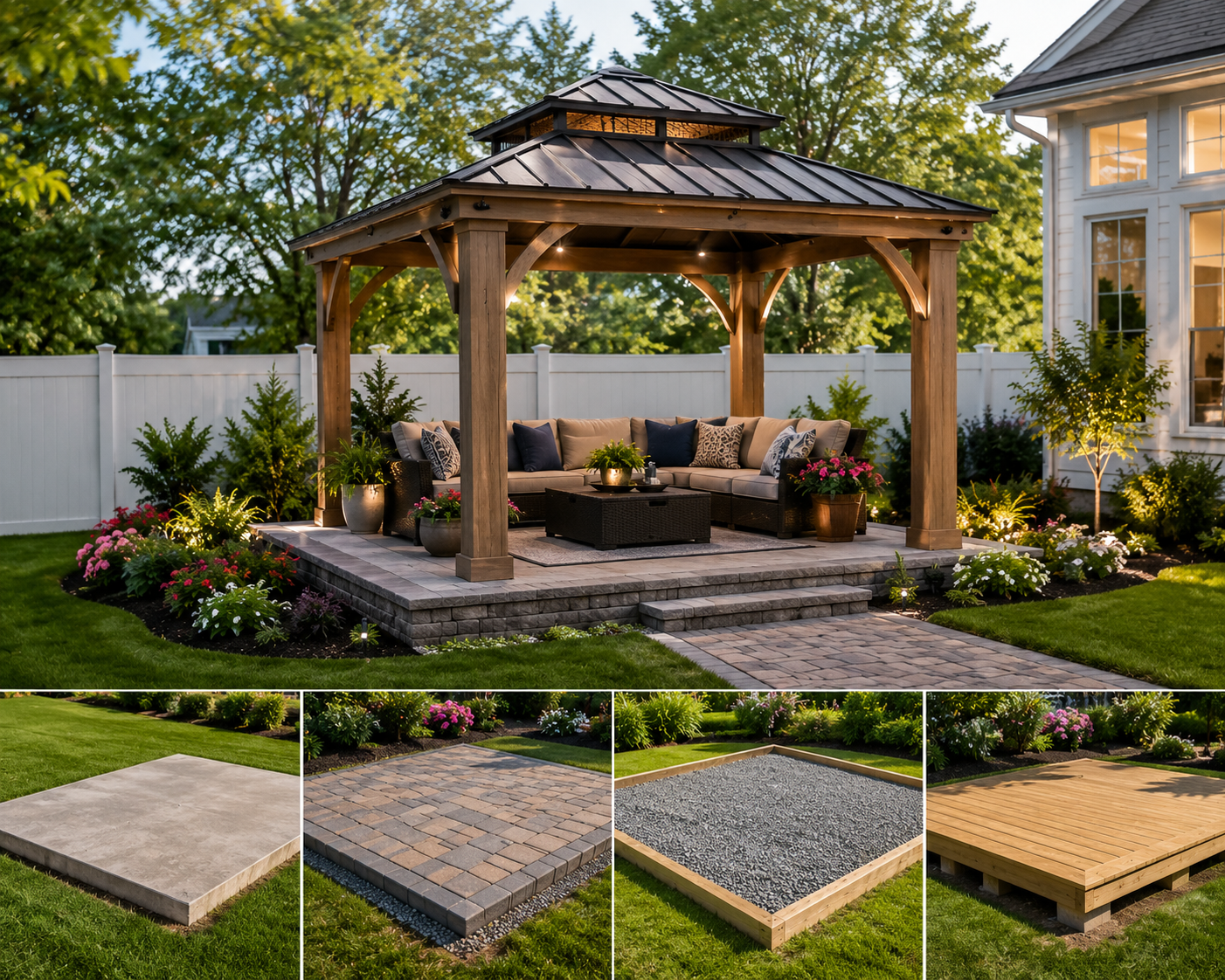
Patio Stones and Pavers. Best for flat ground and gazebos under roughly 12 feet across. Fast to install and budget-friendly, but they distribute weight rather than anchor the structure, so they suit lighter, portable-style gazebos more than permanent ones.
Gravel Base. A compacted gravel pad drains well and works for freestanding, unanchored gazebos. It gives bolts nothing solid to grip, so skip this option if your gazebo needs to be bolted down against wind.
Concrete Slab. The most durable, most anchor-friendly option, and the standard choice for medium to large gazebos in NC’s storm-prone climate. It costs more and takes longer to cure, but it is what most permanent structures actually need.
Sonotube Piers. Best for sloped yards or soft, sandy Sandhills soil where a full slab is not practical. Concrete-filled tube forms reach past unstable topsoil to create individual footings under each post.
How Deep and How Strong: Footings for NC Wind and Soil
North Carolina’s foundation conversation looks different from a lot of national buying guides. Frost depth barely matters here compared to states further north. Wind resistance matters far more.
Anchoring Against Coastal and Storm-Season Wind
The Sandhills region sees remnants of coastal storms move through most summers, and open-sided gazebos catch wind like a sail. Anchoring bolts set into concrete footings, not just weight sitting on gravel, are what keep a gazebo from lifting or shifting during a bad storm.
If your yard sits in a more exposed spot, an anchored concrete foundation is worth the extra cost even for a mid-size structure.
Matching Footing Depth to Gazebo Size
Most standard 10×10 to 12×12 gazebo footings run 24 to 36 inches deep, sized to the post count and structure weight rather than a strict frost line. Larger or heavier gazebos need deeper, wider footings to carry the additional load safely.
Your builder should size footings to your specific model and post spacing, not a generic chart. A gazebo’s engineering varies enough between manufacturers that a one-size answer can leave you under-anchored.
Do You Need a Permit for a Gazebo in North Carolina?
This is the question that stalls more NC homeowners than any sizing decision, and it is the one national buying guides skip entirely.
Quick Answer
North Carolina generally requires a building permit for freestanding accessory structures over 200 square feet, and for any structure with a solid roof, electrical work, or attachment to the home. Smaller freestanding gazebos may fall under a local exemption, but rules vary by county and municipality.
Statewide Code Basics
NC follows a mandatory statewide residential code, so the baseline rules are consistent from Charlotte to Wilmington. Local governments can add stricter requirements on top of the state code, but they cannot relax it below the state minimum.
Checking Your County and HOA Rules
Because gazebos have a solid roof, many jurisdictions treat them more strictly than open pergolas, even at a similar footprint. Our detailed Moore County permit guide walks through exact thresholds, HOA approval steps, and where to file, and the same attached versus freestanding logic applies to gazebos.
If you live in a planned community around Southern Pines or Pinehurst, plan on a separate HOA architectural review in addition to any county permit. Confirm both before you order.
Gazebo Size and Foundation Cost Ranges
Budgeting gets easier once you separate the structure cost from the foundation cost, since buyers often forget the second number.
- Small gazebo (8×8-10×10): structure roughly $2,500 to $6,000, foundation $500 to $1,500
- Medium gazebo (10×12-12×12): structure roughly $6,000 to $10,000, foundation $1,000 to $2,500
- Large gazebo (12×14+): structure roughly $10,000 and up, foundation $2,000 to $5,000 or more
Permits, electrical, and site prep can add several hundred dollars beyond these ranges. For a fuller cost breakdown across outdoor structure types, our pavilion cost guide for Southern Pines covers similar budgeting logic that applies to gazebo projects as well.
Common Mistakes NC Homeowners Make
Buying the size that fits the budget, not the yard. A gazebo that is technically affordable but too small for how you actually entertain gets used less and regretted more.
Skipping the foundation to save money upfront. An unanchored gazebo on bare gravel is the most common reason for storm damage claims we see across Moore County projects.
Assuming no permit is needed because the structure is “just a gazebo.” Solid roofs change the calculation compared to open pergolas, and assuming otherwise leads to stop-work orders later.
Ignoring drainage on sandy or sloped lots. Sandhills soil drains fast in some spots and pools in others. A foundation plan that skips grading often means standing water under the structure after the next heavy rain.
You can see how these decisions play out in real Sandhills backyards in our project gallery, where finished installations show the size and foundation choices homeowners actually made.
Get the Right Size and Foundation the First Time
You do not have to guess your way through this. GreyFox Outdoor has helped Southern Pines and Pinehurst homeowners match gazebo size, foundation type, and permit requirements to their exact yard since 2018.
Bring your yard measurements, and our team will walk you through sizing, foundation options, and what your specific county requires before you commit to anything. You can request a quote online or visit our Southern Pines showroom to see materials and roof styles in person.
Frequently Asked Questions
What size gazebo do I need for my yard?
Most NC yards do well with a 10×12 to 12×12 gazebo, which seats six to eight people. Smaller 8×8 to 10×10 sizes suit tight side yards, while 12×14 and larger fit yards built for regular entertaining.
Does a gazebo need a foundation?
Yes. Every gazebo needs a level, stable base to resist wind uplift and prevent shifting. Lighter gazebos can use patio pavers, while larger or anchored gazebos need a poured concrete slab or footings.
How deep should gazebo footings be?
Standard 10×10 to 12×12 gazebo footings typically run 24 to 36 inches deep, sized to the structure’s weight and post count rather than a fixed frost line, since NC’s frost depth is shallow.
Do I need a permit for a gazebo in NC?
Often yes, since gazebos have a solid roof. Structures over 200 square feet, attached gazebos, and any with electrical generally require a county permit. Rules vary by county, so check locally before ordering.
Gravel base or concrete slab, which is better for a gazebo?
Concrete slabs suit medium to large gazebos that need anchoring against wind. Gravel bases work for smaller, freestanding gazebos on flat, well-draining ground but cannot securely anchor bolts.
Conclusion
Size and foundation are not two separate decisions. They are one decision made twice, once for how the gazebo fits your life and once for how it fits the ground underneath it.
Measure honestly, pick a foundation built for NC wind rather than a national average climate, and confirm your local permit rules before you order. Get those three things right, and the gazebo you pictured on that Saturday morning becomes the one you actually get to enjoy for decades.