TABLE OF CONTENTS
North Carolina Is Tougher on Outdoor Furniture Than You Think
1.1 The Real Cost of Choosing the Wrong Material in NC
1.2 What Makes NC’s Climate Uniquely Destructive to Outdoor Furniture
The Three Climate Zones of North Carolina
2.1 The Piedmont: Heat, Humidity and Summer Thunderstorms
2.2 The Coast and Outer Banks: Salt Air, UV and Storm Risk
2.3 The Mountains: Freeze-Thaw Cycles and Cold Season Damage
Best Outdoor Furniture Materials for North Carolina’s Climate
3.1–3.5 Powder-Coated Aluminum, HDPE Poly Lumber, Teak, Resin Wicker, Sunbrella Fabrics
Materials to Avoid in North Carolina’s Climate
NC Outdoor Furniture Seasonal Care Calendar
Most Common Mistakes NC Homeowners Make When Buying Outdoor Furniture
How Greyfox Outdoor Helps You Get It Right the First Time
Frequently Asked Questions
Conclusion
How to Choose Outdoor Furniture That Lasts in North Carolina’s Climate
Picture this: you spend a few hundred dollars on a patio set in spring. By August it’s fading. By the following spring, the cushions are growing mold and the frame is showing rust. Sound familiar?
You are not alone. This is one of the most common frustrations North Carolina homeowners face every single year. And the cause is almost always the same: buying furniture built for the wrong climate.
North Carolina’s climate is not gentle. It combines punishing summer humidity, intense UV heat, tropical thunderstorms, coastal salt air, and mountain freeze-thaw cycles into one state. That is a lot to ask of any outdoor furniture.
At Greyfox Outdoor, we help NC homeowners make smart, lasting choices for their outdoor spaces. In this guide, we break down exactly what works, what fails, and why, so you buy right the first time.
1. North Carolina Is Tougher on Outdoor Furniture Than You Think
The Real Cost of Choosing the Wrong Material in NC
Most people focus on the price tag at the point of purchase. But the real cost of cheap or climate-wrong outdoor furniture adds up fast.
- Replacing a full patio set every 2 to 3 years instead of every 10 to 15
- Spending weekends scrubbing mold off cushions instead of relaxing on them
- Watching a frame rust and warp before the warranty even expires
- Losing money on furniture that looks great in a showroom but falls apart after one NC summer
The right furniture, matched to NC’s actual climate, can last 10 to 20 years with minimal effort. The wrong choice rarely survives three seasons.
What Makes NC’s Climate Uniquely Destructive to Outdoor Furniture
North Carolina sits in a humid subtropical climate zone, but that description barely scratches the surface. Here is what your outdoor furniture is actually up against:
- Summer humidity levels regularly hitting 85 to 95 percent
- Average of 200-plus sunny days per year with high UV intensity
- Thunderstorm season running from spring through early fall
- Coastal salt air that accelerates rust and corrosion near the Outer Banks and Wilmington
- Mountain freeze-thaw cycles in Asheville and Boone that crack wood and expand metal joints
This combination is what makes NC so hard on furniture. Humidity drives mold and rust. UV rays fade and weaken fabrics and plastics. Salt air corrodes metals. Cold snaps crack and warp untreated wood. Every season brings a new threat.
2. The Three Climate Zones of North Carolina, and Why Your Zip Code Changes Everything
Here is what most furniture guides get completely wrong: they treat North Carolina as one climate. It is not. NC has three distinct micro-climates, and each one demands a different approach to outdoor furniture.
The Piedmont: Charlotte, Raleigh, Greensboro, Southern Pines
The Piedmont is NC’s most populated zone and its most humidity-intense. Prioritize mold resistance, rust-proof frames, and solution-dyed fabrics.
The Piedmont sits at the heart of NC and sees the most extreme combination of summer heat and relentless humidity. Temperatures regularly climb above 90 degrees Fahrenheit while humidity hovers near 90 percent. Summer thunderstorms roll through fast and heavy.
For Piedmont homeowners, the biggest threats are mold on cushions, rust on exposed metal hardware, and UV fading on lower-quality fabrics. Furniture needs to handle daily heat, surprise downpours, and sticky humidity without showing the effects within a single season.
Best choices for the Piedmont: powder-coated aluminum frames, solution-dyed acrylic fabrics like Sunbrella, HDPE poly lumber, and all-weather resin wicker.
The Coast and Outer Banks: Wilmington, OBX, New Bern
Coastal NC adds salt air to the humidity equation. Only corrosion-resistant materials with marine-grade hardware survive long-term.
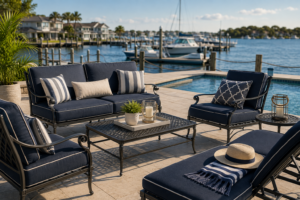
Coastal North Carolina plays a different game entirely. Salt air is invisible, but it is relentless. It accelerates corrosion on metal furniture at a rate that catches most homeowners completely off guard. A frame that would last eight years inland might show rust within two years on the coast.
Hurricane season from June through November also means furniture needs to be either heavy enough to stay put or easy to move and store quickly. Lightweight aluminum, while excellent for other reasons, may need heavier bases or storage solutions near the coast.
Best choices for coastal NC: marine-grade 316 stainless steel hardware, HDPE poly lumber, powder-coated aluminum with rust-proof fasteners, and teak with annual oil treatment.
The Mountains: Asheville, Boone, Hendersonville
The NC mountains bring freeze-thaw cycles that crack wood and weaken wicker. Choose materials that expand and contract without damage.
The western mountains of NC operate on a different seasonal timeline. Winters are real here. Asheville and Boone regularly see temperatures drop well below freezing, and freeze-thaw cycles create a specific kind of damage that the Piedmont and coast never experience.
Water seeps into tiny cracks in wood and untreated materials. When it freezes, it expands. When it thaws, the material shifts. Over one or two winters, this process splits frames, pops joints, and weakens structural integrity.
Best choices for the NC mountains: HDPE poly lumber (will not absorb water at all), sealed teak, or powder-coated aluminum with reinforced joints. Avoid natural rattan, pine, and untreated wicker.
3. Best Outdoor Furniture Materials for North Carolina’s Climate
Browse the full collection at Greyfox Outdoor’s patio furniture selection to see how these materials look in real NC-ready outdoor spaces.
Powder-Coated Aluminum: The All-Around Winner for NC
Powder-coated aluminum is the go-to material for most NC homeowners for good reason. It does not rust, does not retain heat uncomfortably, is lightweight enough to move easily, and holds up through both NC summers and mild winters.
The key word is powder-coated. The coating adds a protective layer that resists UV fading, chipping, and moisture penetration. Look for fully welded joints and marine-grade stainless steel hardware (not zinc or standard steel screws) for the best results near the coast.
Lifespan in NC: 15 to 20 years with basic annual cleaning.
HDPE Poly Lumber: Best for Year-Round NC Durability
High-density polyethylene, commonly called poly lumber, is made from recycled plastics and engineered to handle exactly the conditions NC dishes out. It does not absorb water, which means it cannot warp, crack, rot, or grow mold. It shrugs off UV rays. It survives freeze-thaw cycles without damage.
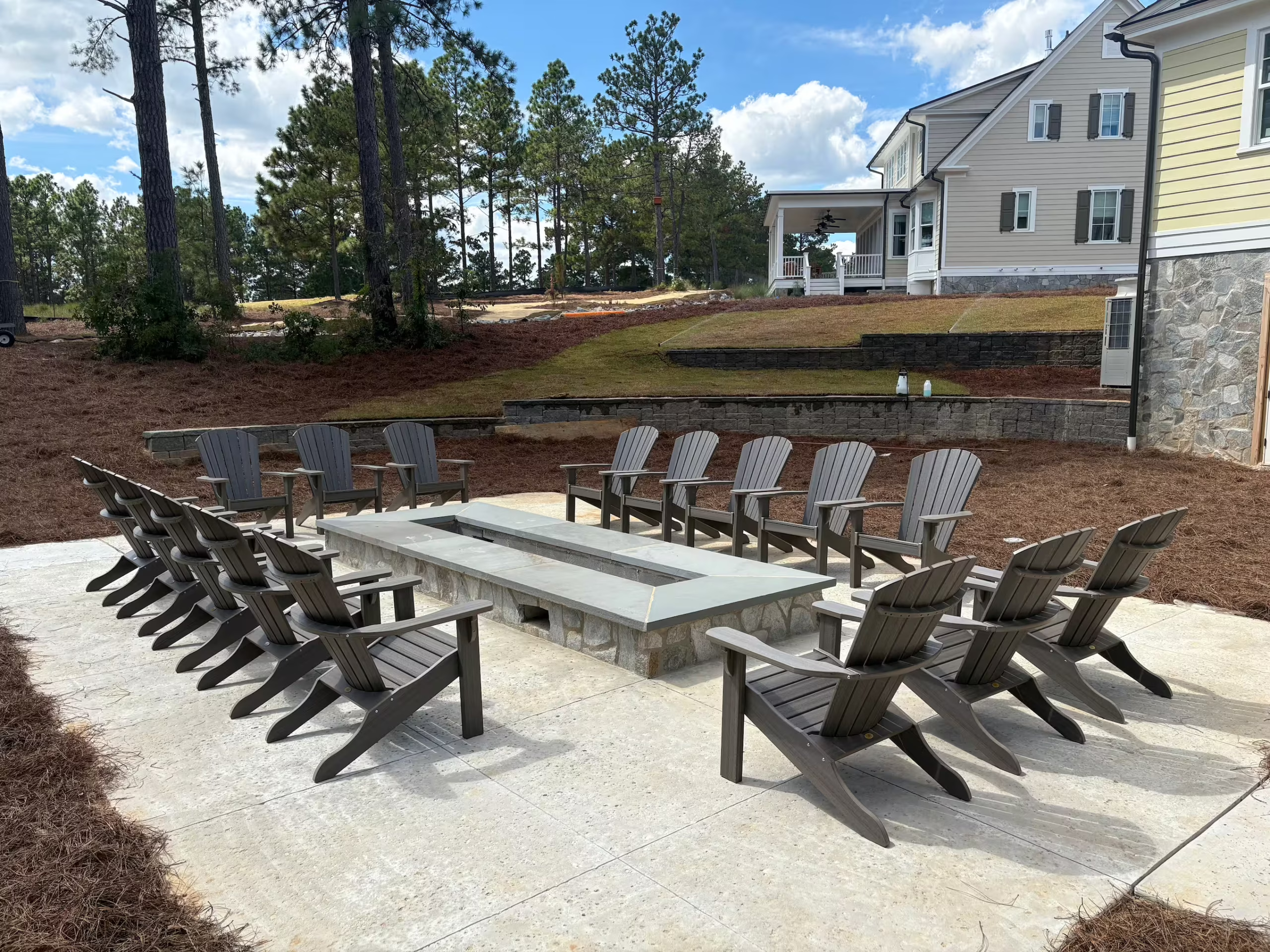
HDPE poly lumber looks like wood but outperforms it in every weather category NC throws at it. It is especially popular for Adirondack chairs, dining sets, and benches that stay outside year-round.
Lifespan in NC: 20 or more years. Zero seasonal maintenance required.
Teak Wood: Premium Choice With One Important Condition
Teak is a dense tropical hardwood with naturally occurring oils that repel moisture, resist mold, and hold up against insects. In NC’s humid climate, teak genuinely outperforms almost every other wood option.
The one condition: it needs an annual oil treatment to maintain its rich color. Without it, teak weathers to a silver-gray over time. The gray is purely cosmetic and does not affect durability, but if you want it looking its best, plan for seasonal care. For NC homeowners who invest in quality, teak pays off over a 15 to 25-year lifespan.
All-Weather Resin Wicker: Style That Survives NC Summers
Natural rattan and traditional wicker belong indoors in NC. But all-weather resin wicker, made from synthetic polyethylene fibers over a powder-coated aluminum frame, is a completely different story.
It resists UV fading, does not absorb humidity, and drains quickly after rain. The synthetic fibers will not fray, rot, or discolor through NC summers. If you love the wicker aesthetic, this is the only version worth considering for outdoor use in NC.
Solution-Dyed Acrylic Fabrics (Sunbrella): The Only Fabric NC Weather Respects
Cushion fabric is where budget outdoor furniture fails fastest in NC. Regular polyester cushions become mold farms within a single humid season. Solution-dyed acrylic fabrics, with Sunbrella being the most recognized brand, are dyed at the fiber level rather than the surface.
This means UV rays cannot fade them from the outside because the color goes all the way through. They also resist mold, mildew, and moisture penetration far better than standard outdoor fabrics. For NC humidity, this is not a luxury. It is a necessity.
4. Materials to Avoid in North Carolina’s Climate
Natural Rattan and Untreated Wicker: Beautiful Until the First NC Summer
Natural rattan absorbs moisture like a sponge. In NC’s summer humidity, it swells, weakens, and begins breaking down within one season. The fibers fray, the structure softens, and mold finds a home deep in the weave where cleaning cannot reach. Keep rattan and untreated wicker indoors.
Untreated Softwoods: Pine, Acacia, and Budget Cedar
Pine and acacia are common in budget patio sets and look appealing on the showroom floor. In NC, they absorb humidity, swell, and begin to warp and rot within two to three seasons. Even treated versions of these softer woods require constant maintenance to survive NC summers. They are simply not worth the upkeep.
Bare Steel and Wrought Iron: Rust Season Starts Earlier Than You Expect
Bare steel and wrought iron have their place in covered, protected outdoor areas. But in NC’s open-air humidity, rust appears faster than most homeowners expect. Even small scratches in the protective finish become entry points for moisture. In coastal areas, bare metal furniture can show visible corrosion within a single season.
5. NC Outdoor Furniture Seasonal Care Calendar
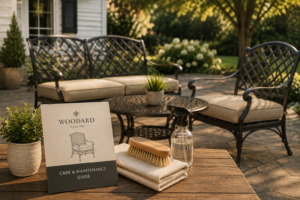
One of the biggest differences between furniture that lasts and furniture that doesn’t is a simple seasonal routine. Here is what to do and when.
Spring (March to May): Inspect, Clean, and Set Up
- Inspect all frames for scratches, rust spots, and loose hardware from winter
- Clean all surfaces with mild soap and water before use
- Re-oil any teak pieces before the humid season begins
- Check cushion covers for any mold that developed in storage
Summer (June to August): Protect and Maintain
- Bring cushions inside or use waterproof covers during heavy thunderstorm periods
- Hose down resin wicker and aluminum after storms to prevent debris buildup
- Apply UV protectant spray to fabric cushions if they are not solution-dyed acrylic
- Coastal homeowners: rinse salt residue off furniture weekly with fresh water
Fall (September to November): Deep Clean and Prepare
- Deep clean all surfaces before storing or covering for the colder months
- Store cushions in a dry indoor space or waterproof outdoor storage box
- Apply a fresh coat of sealant to any teak or treated wood pieces
- Cover aluminum and resin wicker sets with breathable furniture covers
Winter (December to February): Storage by NC Region
- Piedmont: Covering is usually sufficient. Cushions stored inside
- Mountains: Bring cushions and lightweight pieces indoors. HDPE and sealed teak can stay out
- Coast: Focus on securing and covering against storm wind. Rinse any salt buildup before covering
6. The Most Common Mistakes NC Homeowners Make When Buying Outdoor Furniture
Buying for Looks Without Checking Material Specs
A patio set can look stunning in a catalog photo and fall apart after one NC summer. Always check the specific material of the frame, the hardware type, and the fabric composition before purchasing. Ask if the cushions are solution-dyed. Ask if the frame is 100 percent aluminum or mixed metal.
Treating All of NC as the Same Climate
A Wilmington homeowner and an Asheville homeowner have very different furniture needs. Salt air resistance matters more near the coast. Freeze-thaw durability matters more in the mountains. Humidity and UV performance matter most in the Piedmont. Match your furniture to your specific NC location.
Skipping Cushion Fabric Quality to Save Money
Cushions are often where shoppers try to cut costs. In NC, this is a mistake that shows up quickly. Budget polyester cushions develop mold within a single humid season. Investing in Sunbrella or equivalent solution-dyed acrylic fabrics pays for itself by avoiding replacement costs within the first two years.
Ignoring Hardware: The First Place NC Furniture Fails
Frames often look intact while the screws, bolts, and fasteners rust and fail. Always look for marine-grade stainless steel hardware, particularly on coastal properties. Zinc and standard steel fasteners corrode in NC humidity far faster than the frame itself.
7. How Greyfox Outdoor Helps You Get It Right the First Time
We Know NC Because We Live and Work Here
Greyfox Outdoor is based right here in Southern Pines, NC at 225 W Morganton Rd C, Southern Pines, NC 28387. We are not a national chain guessing at what NC needs. We experience the same summer humidity, the same thunderstorm seasons, and the same climate challenges our customers do.
That local knowledge shapes every recommendation we make. We know what holds up in Pinehurst and what fails on the Outer Banks. We know why a piece that works beautifully in Charlotte needs a different care routine in Boone.
Furniture Matched to Your NC Region, Not Just a Generic Catalog
When you visit our patio furniture collection or browse our outdoor furniture galleries, you are seeing furniture curated with NC’s real climate in mind, not just what looks good in a staged photo.
Our team can help you match the right materials to your exact location in NC, whether you are furnishing a covered porch in the Piedmont, an exposed deck in the mountains, or a coastal patio near the water.
8. Frequently Asked Questions
Can I leave outdoor furniture outside year-round in North Carolina?
Yes, but only if you choose the right materials. HDPE poly lumber and powder-coated aluminum can stay outside year-round in most NC regions. In the mountains, bring cushions inside during hard freezes. In coastal areas, secure furniture before storm season.
What is the best outdoor furniture material for North Carolina humidity?
Powder-coated aluminum and HDPE poly lumber are the top choices for NC humidity. Both resist moisture absorption, mold, and rust. Pair either with solution-dyed acrylic cushions (like Sunbrella) for complete protection against NC’s summer humidity.
How do I protect outdoor furniture from NC mold and mildew?
Choose cushion fabrics that are mold-resistant by design, such as solution-dyed acrylic fabrics. Store cushions during extended rain or off-season periods. Clean furniture frames with mild soap and water at the start and end of each season. Improve airflow around furniture by not pushing it flat against walls.
Is teak furniture worth it in North Carolina’s climate?
Yes. Teak’s natural oils make it one of the best wood options for NC’s humidity. It resists mold, rot, and insects. The trade-off is annual oiling to maintain color. Without oiling, teak turns silver-gray over time, which is cosmetic only and does not affect its structural durability.
What outdoor furniture works best near the NC coast?
Near the NC coast, prioritize corrosion resistance. HDPE poly lumber is the top choice since it has no metal to rust. If you prefer aluminum, ensure all hardware is marine-grade 316 stainless steel. Rinse salt residue off furniture weekly with fresh water to extend its lifespan significantly.
Conclusion: Make the Right Call Once, Enjoy Your Outdoor Space for Years
North Carolina is a beautiful state to live in. Your outdoor space should be a place to enjoy it, not a source of seasonal frustration and replacement costs.
The difference between furniture that lasts 15 years and furniture that fails in three seasons is not that big a price gap. It is mostly knowledge. Now you have it.
Know your NC climate zone. Choose materials built for humidity, UV, and your region’s specific conditions. Invest in solution-dyed fabrics. Check the hardware. And do a simple seasonal care routine that takes a few hours a year but adds years to your furniture’s life.
Greyfox Outdoor is here to help you every step of the way. Visit us at greyfox-outdoor.com, explore our patio furniture collections, or stop by our showroom at 225 W Morganton Rd C, Southern Pines, NC. Let’s find the furniture that is right for your NC home, your climate zone, and your lifestyle.