Table of Contents
- Why Traditional Fire Pits Ruin the Evening They Are Supposed to Make Better
- What Is a Smokeless Fire Pit? (Plain Language Answer)
- How Does a Smokeless Fire Pit Actually Work?
- Smokeless vs Traditional vs Gas Fire Pits: Which One Fits Your NC Backyard?
- Is a Smokeless Fire Pit Actually Smokeless?
- Is a Smokeless Fire Pit Worth It in NC?
- Not Sure Which Fire Pit Fits Your Backyard?
- NC Neighborhood, HOA, and Climate Considerations
- What to Look for When Buying a Smokeless Fire Pit
- Frequently Asked Questions About Smokeless Fire Pits in NC
- Find the Right Fire Pit for Your NC Backyard
Everyone is settled in. The drinks are poured. The fire is going.
And then the wind shifts, and suddenly half the group is coughing, eyes watering, scooting their chairs to the other side of the circle for the third time tonight.
If you have ever hosted a backyard fire night in NC, you know this dance. It happens every single time, regardless of how carefully you stack the wood or how many times you swear this log is the dry one.
A friend mentions they bought a smokeless fire pit and have not dealt with that problem since. You are curious, a little skeptical, and not sure if it is worth the extra money or just clever marketing.
This guide settles that question. We will explain exactly what a smokeless fire pit is, how the technology actually works, and whether it makes sense for your specific NC backyard.
If you want to browse fire pit options while you read, GreyFox Outdoor’s outdoor structures is available right here in Southern Pines.
Why Traditional Fire Pits Ruin the Evening They Are Supposed to Make Better
The Musical Chairs Game Every Fire Pit Owner Knows
A traditional fire pit creates a specific kind of social chaos. Everyone wants to sit close enough to feel the warmth but far enough to avoid the smoke. The wind decides who wins that negotiation, and it changes its mind every ten minutes.
What Is Actually Causing All That Smoke?
Smoke comes from moisture and unburned gases trapped in your fuel. Wood that has not fully combusted releases those trapped particles into the air as visible smoke. The wetter or less seasoned the wood, the more smoke you get, regardless of how the fire pit itself is built.
This is the exact problem smokeless fire pit design was created to solve.
What Is a Smokeless Fire Pit? (Plain Language Answer)
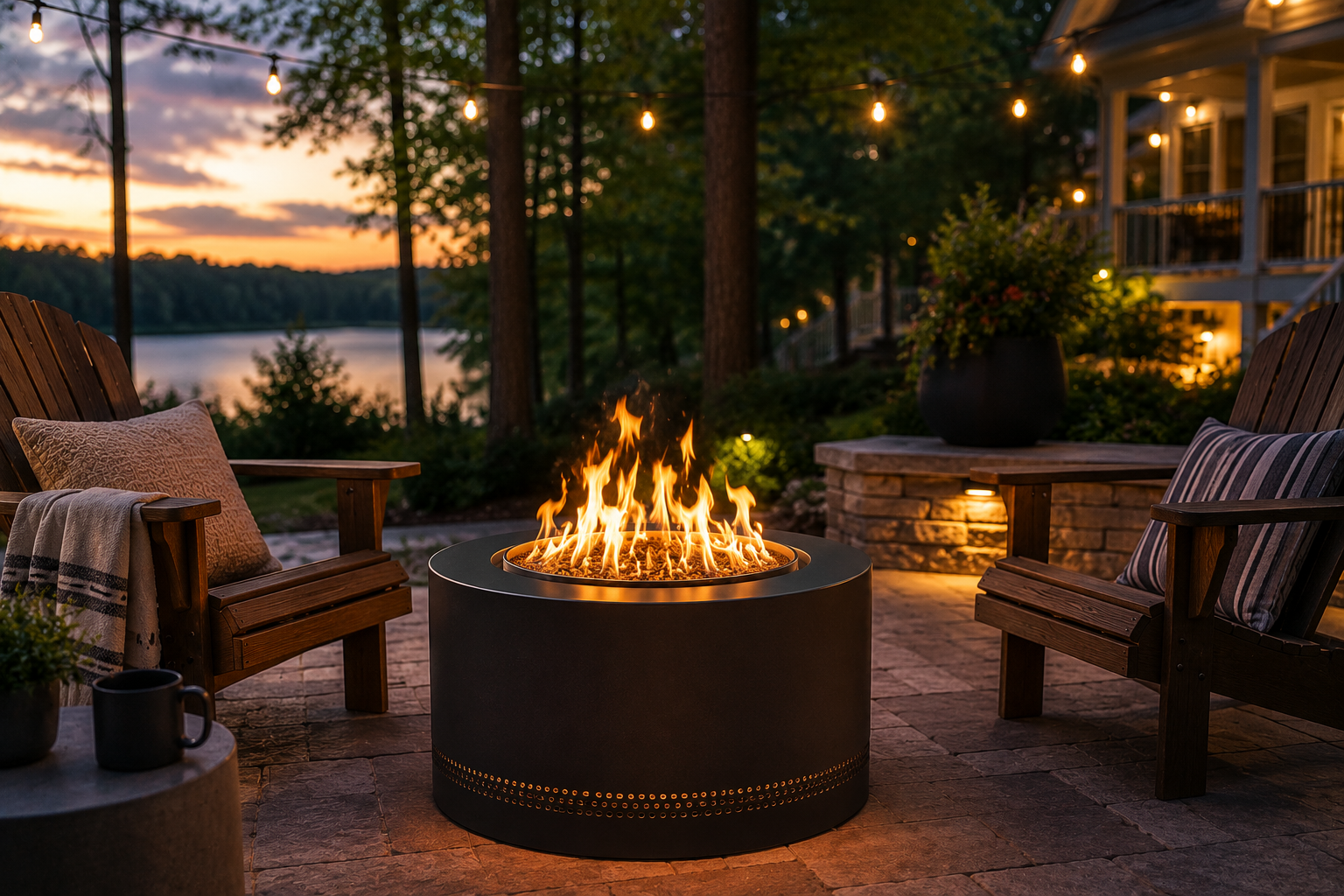
A smokeless fire pit is a wood-burning fire pit engineered with a double-wall design and strategically placed air vents that burn off smoke particles before they escape. It still uses real wood and produces a real flame, but it dramatically reduces visible smoke compared to a traditional open fire pit.
What Makes It Different From a Regular Fire Pit
A regular fire pit is essentially an open bowl or ring that contains a fire with no engineered airflow system. A smokeless fire pit adds an inner and outer wall with vents that create a controlled airflow loop, which is the entire secret behind the reduced smoke.
What “Smokeless” Actually Means (And What It Does Not)
No wood-burning fire is ever completely free of smoke. Even the best smokeless fire pit will show some smoke during startup or when the wood is damp. What changes is how quickly that smoke clears and how dramatically less of it you see once the fire is established. Treat “smokeless” as “dramatically reduced,” not “zero.”
How Does a Smokeless Fire Pit Actually Work?
Primary Combustion: The Part That Works Like Any Fire
You light the wood at the bottom of the pit just like any traditional fire. Air enters through vents at the base to feed this first stage of burning. This part is identical to a standard fire pit.
Secondary Combustion: Where the Magic Happens
This is where the design earns its name. As the fire heats up, air gets pulled into the space between the inner and outer walls. That air heats dramatically as it rises, sometimes reaching 500 to 700 degrees Fahrenheit by the time it exits through vents near the top rim.
When that superheated air meets the rising smoke and unburned particles, it reignites them. The smoke essentially gets a second chance to burn completely instead of drifting away as visible haze. This is called secondary combustion, and it is the entire mechanism behind every smokeless fire pit on the market.
Why This Design Burns Hotter, Not Just Cleaner
Because more of the fuel actually combusts instead of escaping as unburned smoke, the fire burns hotter and more efficiently. You often get more heat from the same amount of wood, which means a smokeless fire pit can be more economical over time for people who use it frequently.
Smokeless vs Traditional vs Gas Fire Pits: Which One Fits Your NC Backyard?
Smokeless vs Traditional Wood-Burning Fire Pits
A traditional fire pit costs less upfront, typically $50 to $300, and gives you the full classic campfire experience including the smoke. A smokeless fire pit costs more, generally $200 to $600, but dramatically reduces the smoke, odor, and eye irritation that come standard with the traditional version.
Smokeless vs Gas Fire Pits
Gas fire pits eliminate smoke entirely since there is no wood combustion involved, and they offer instant on and off convenience. What they sacrifice is the authentic crackle, wood scent, and visual character of a real wood fire. A smokeless wood-burning pit is the middle ground: real fire, real wood, dramatically less smoke than the traditional version.
A Quick Comparison Table
| Feature | Traditional Fire Pit | Smokeless Fire Pit | Gas Fire Pit |
| Smoke Level | High | Low | None |
| Real Wood Experience | Yes | Yes | No |
| Upfront Cost | $50 to $300 | $200 to $600 | $300 to $1,500+ |
| Ongoing Fuel Cost | Wood | Wood | Propane or natural gas |
| Setup Convenience | Moderate | Moderate | Instant |
| Portability | Often portable | Often portable | Usually fixed installation |
For a deeper comparison of wood versus gas specifically, our existing guide on gas fire pit vs wood burning fire pit options for NC backyards covers the full breakdown.
Is a Smokeless Fire Pit Actually Smokeless?
No fire pit that burns wood is ever 100 percent smoke-free. A smokeless fire pit dramatically reduces visible smoke through secondary combustion, but you will still see some smoke during startup, with damp or green wood, or in windy conditions. Once the fire is fully established with dry, seasoned wood, the smoke reduction is significant.
When You Will Still See Some Smoke
Expect brief smoke during the first few minutes as the fire establishes itself. Wind can also disrupt the airflow pattern the design depends on, temporarily increasing visible smoke. Neither of these situations means the fire pit is defective. It is simply the nature of wood combustion.
What Wood Type and Moisture Have to Do With It
Dry, seasoned hardwood like oak, hickory, or maple performs best in any smokeless design. Wet or green wood contains more trapped moisture, which creates more smoke regardless of how advanced the airflow engineering is. The fire pit design cannot fully compensate for poor fuel choice.
Is a Smokeless Fire Pit Worth It in NC?
Who Gets the Most Value From One
A smokeless fire pit makes the most sense for NC homeowners who use their fire pit regularly throughout the year, live in tighter subdivisions where smoke drifts toward neighboring patios, or simply find smoke genuinely irritating enough that it limits how often they actually use the fire pit they already own.
Who Might Be Better Off With a Traditional Pit
If you light a fire only a few times a year, live on a larger rural lot with significant distance from neighbors, or are working with a tight budget, a traditional fire pit still delivers the classic experience at a fraction of the cost.
The Real Cost Difference and What You Get for It
The price gap between traditional and smokeless models typically runs $150 to $400. For frequent users, that difference often pays for itself in increased usage and enjoyment within the first year. For occasional users, the upgrade may not be worth the premium.
Not Sure Which Fire Pit Fits Your Backyard?
Every NC backyard is different. Lot size, neighbor proximity, and how often you actually gather outside all factor into the right choice.
Visit GreyFox Outdoor in Southern Pines or call +1 910-725-0394 to talk through which fire pit style actually fits how you use your backyard.
NC Neighborhood, HOA, and Climate Considerations
Smokeless Fire Pits and NC Burn Ordinances
Many local jurisdictions classify smokeless fire pits as cooking appliances rather than open burning, which can exempt them from certain burn ban restrictions that apply to traditional open fires. Rules vary by county and municipality across NC, so checking your specific local ordinance before purchasing is always the right move.
Why Smokeless Makes Sense for Tighter NC Subdivisions
NC has seen significant growth in close-lot subdivisions across Moore County, Cumberland County, and the broader Sandhills region. In these tighter layouts, smoke drift toward a neighbor’s patio or open windows is a real and common source of friction. A smokeless design meaningfully reduces that spillover effect.
How NC Humidity Affects Wood Seasoning and Smoke Output
NC’s humid climate makes it harder to fully season firewood compared to drier regions. Wood that feels dry to the touch can still hold internal moisture longer in NC’s air. This means NC fire pit owners, smokeless or traditional, often need extra seasoning time or kiln-dried wood to get the cleanest possible burn.
What to Look for When Buying a Smokeless Fire Pit
Size and Burn Chamber Capacity
Larger burn chambers accommodate full-size logs without needing to chop wood into smaller pieces, which is more convenient for regular use. Smaller portable models are easier to move but limit how much wood you can burn at once.
Material and Build Quality for NC Weather
Stainless steel construction holds up best against NC’s humidity and resists rust better than lower-grade steel options. Given the moisture exposure most NC backyards face throughout the year, material quality directly affects how long the fire pit lasts.
Portable vs Built-In Options
Portable stainless steel models work well for smaller patios or homeowners who want flexibility to move the fire pit around the yard. Built-in stone or steel installations suit larger properties planning a permanent outdoor entertaining area. If you are designing a full outdoor living space, our guide on choosing between a pergola, gazebo, or pavilion for your NC property pairs well with planning a permanent fire feature.
Frequently Asked Questions About Smokeless Fire Pits in NC
What is a smokeless fire pit?
A smokeless fire pit is a wood-burning fire pit with a double-wall design and engineered air vents that reignite smoke particles before they escape, dramatically reducing visible smoke compared to a traditional open fire pit while still burning real wood.
Is a smokeless fire pit actually worth it?
A smokeless fire pit is worth it for people who use their fire pit frequently, live in close-lot neighborhoods where smoke bothers neighbors, or find smoke genuinely irritating. Occasional users on larger rural properties may not see enough value to justify the higher cost.
How does a smokeless fire pit work?
A smokeless fire pit uses a double-wall design that draws in air through bottom vents, heats that air as it rises between the walls, and releases it through top vents directly into the rising smoke. This superheated air reignites unburned particles in a process called secondary combustion, dramatically reducing visible smoke.
Is a smokeless fire pit completely smoke free?
No fire pit that burns real wood is completely smoke free. A smokeless fire pit dramatically reduces visible smoke through secondary combustion, but some smoke is still visible during startup, with damp wood, or in windy conditions.
How much more does a smokeless fire pit cost than a regular one?
Traditional fire pits typically cost $50 to $300, while smokeless models generally run $200 to $600. The price difference is usually $150 to $400, which frequent users often recoup through increased comfort and usage over the first year.
Are smokeless fire pits allowed during NC burn bans?
Many NC jurisdictions classify smokeless fire pits as cooking appliances, which can exempt them from certain open-burn restrictions during burn bans. Rules vary by county and municipality, so always check your specific local ordinance before assuming an exemption applies.
What kind of wood works best in a smokeless fire pit?
Dry, seasoned hardwoods like oak, hickory, and maple perform best in smokeless fire pit designs. Wood that has dried for at least six months produces significantly less smoke than wet or green wood. In NC’s humid climate, extra seasoning time or kiln-dried wood often produces the cleanest burn.
Find the Right Fire Pit for Your NC Backyard
A smokeless fire pit will not eliminate every trace of smoke from your backyard fire nights, but it gets remarkably close, and the difference is noticeable from the very first use.
Whether a smokeless model makes sense for you comes down to how often you gather outside, how close your neighbors are, and how much that smoke-free upgrade is actually worth to your evenings.
GreyFox Outdoor helps NC families across Southern Pines, Pinehurst, and the surrounding Sandhills region choose outdoor living features built for the way they actually use their backyard.
Visit us at 225 W Morganton Rd C, Southern Pines, NC 28387, call +1 910-725-0394, or browse our full outdoor structures and fire feature collection to find the right fit for your backyard.
The best fire pit is the one that gets used often, not the one sitting unused because everyone keeps coughing through the smoke.