Table of Contents
- Cast vs Extruded Aluminum: The Short Answer
- How Cast Aluminum Furniture Is Made
- How Extruded Aluminum Furniture Is Made
- Cast vs Extruded Aluminum: Side-by-Side Comparison
- Which Holds Up Better in Sandhills Weather?
- Blended Sets: Getting the Best of Both
- What to Check Before You Buy
- Which Type Fits Your Outdoor Space?
- How to Care for Aluminum Outdoor Furniture
- See and Feel the Difference in Person
- Frequently Asked Questions About Cast vs Extruded Aluminum Furniture
- Find the Right Aluminum Furniture With GreyFox Outdoor
Mark and Ellen stood between two black aluminum dining sets.
From six feet away, they looked like twins. Same color. Same curved backs. Same “weather-resistant” tag.
Ellen reached for one chair and lifted it with two fingers. Then she tried the other. It barely moved.
“Why is this one so heavy?” she asked.
“That one’s cast,” the salesperson said. “The other’s extruded.”
They both nodded like that cleared things up. It didn’t.
They had just finished building a back patio overlooking the golf course in Pinehurst. Open views. Big sky. And, as they’d already learned, some serious afternoon wind.
They wanted furniture that looked great, stayed put, and lasted. But they had no idea which build actually delivered that.
If you’ve ever stood in a showroom feeling the same way, this guide is for you.
You’ll learn the real difference between cast vs extruded aluminum outdoor furniture, how each holds up in Sandhills weather, when blended sets make sense, and the exact quality checks to make before you buy.
Want to compare them side by side? Call GreyFox Outdoor at (910) 725-0394.
Cast vs Extruded Aluminum: The Short Answer
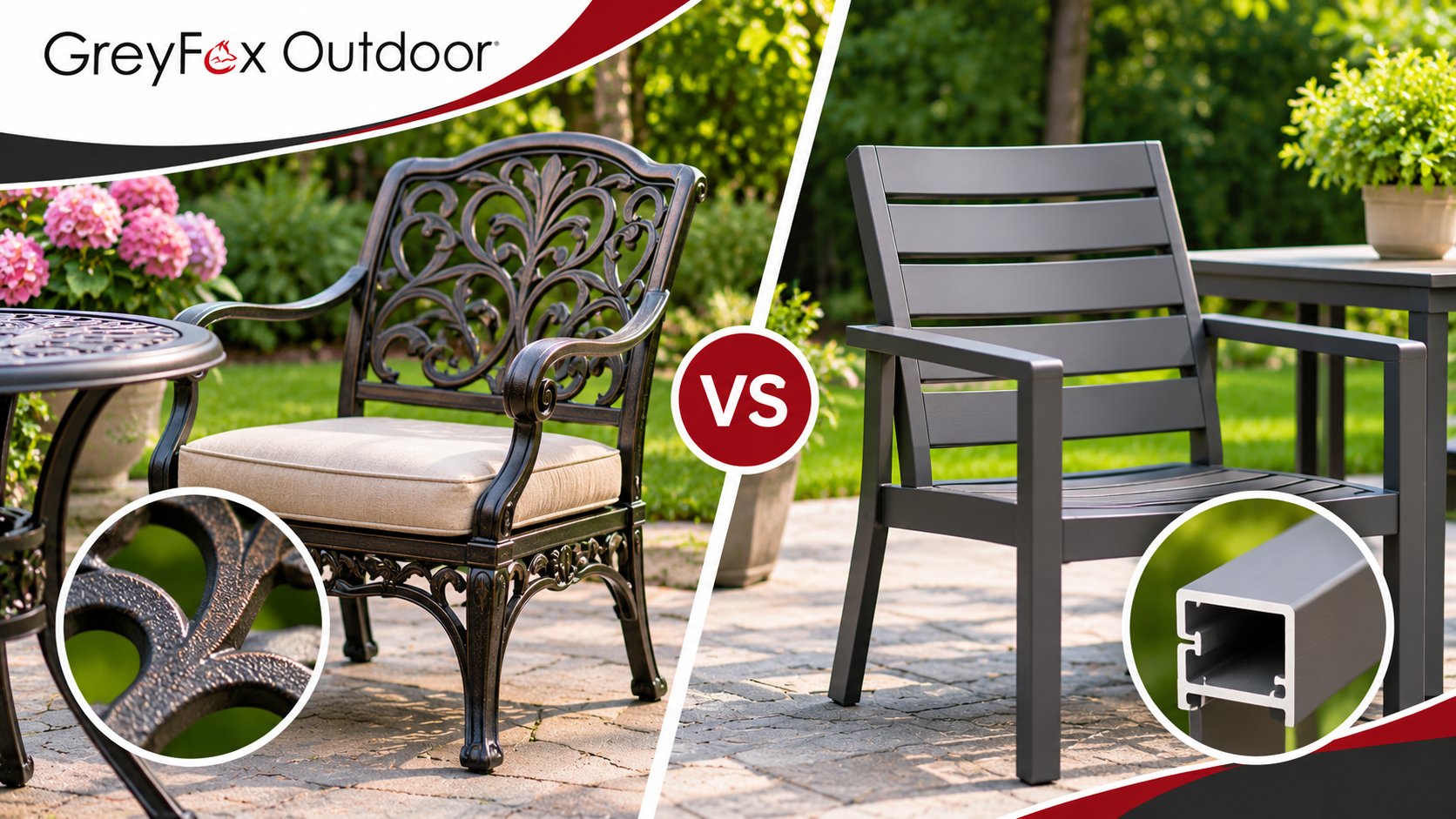
Cast aluminum furniture is made by pouring molten aluminum into molds, creating solid, heavier pieces with detailed designs. Extruded aluminum furniture is made from hollow aluminum tubes shaped by machines, creating lighter pieces with clean lines. Both can last for years when built well, so construction quality matters as much as the type.
Same Metal, Different Build
Both types use aluminum, which doesn’t rust like iron or steel. The difference is how the metal is shaped.
The cast is solid and heavy. Extruded is hollow and lighter.
Why Build Quality Matters More Than the Label
Here’s what most shoppers never hear. One industry expert put it simply: there’s no distinctive functional difference between high-quality cast and high-quality extruded aluminum. They’re just different ways to make different styles.
That said, cast aluminum’s solid build often gives it extra durability and longevity.
The real difference between a great set and a disappointing one usually comes down to welds, finish, hardware, and design.
How Cast Aluminum Furniture Is Made
Cast aluminum furniture is made by pouring molten aluminum into three-dimensional molds. Once cooled, the solid pieces are finished, assembled, and powder coated. This process allows ornate details, curves, and patterns that hollow tubing can’t easily create, and produces heavier furniture that feels sturdy and substantial.
Molten Metal, Detailed Molds
Think of it like baking in a decorative pan. The mold shapes every swirl, scroll, and pattern.
The result is solid aluminum with no hollow sections.
Strengths of Cast Aluminum
- Heavy and stable, so it stays put on windy patios
- Ornate, classic designs that mimic wrought iron
- Solid, rigid feel when you sit down
- Rust-resistant aluminum base
Trade-Offs to Know
- Heavier to move and rearrange
- Usually higher priced
- Not ideal for stacking or frequent storage
- Rigid pieces should be handled carefully, not dropped on stone or concrete
How Extruded Aluminum Furniture Is Made
Extruded aluminum furniture is made by pushing heated aluminum through a shaped die to form hollow tubes or profiles. These tubes are cut, bent, welded, reinforced, and powder coated. The result is lighter furniture with clean, modern lines that’s easy to move, stack, and store.
Hollow Profiles and Clean Lines
Imagine squeezing toothpaste through a shaped opening. Extrusion works similarly, creating long, uniform aluminum tubes.
Quality manufacturers reinforce these frames internally and finish them with a baked-on powder coat.
Strengths of Extruded Aluminum
- Lightweight and easy to move
- Stackable options for storage
- Clean, modern, or transitional styles
- Often more budget-friendly than cast
Trade-Offs to Know
- Lighter pieces may shift in strong wind
- Thin-walled, budget versions can dent or flex
- Quality varies widely between brands
Comparing aluminum to other materials? Read poly lumber vs aluminum vs teak in North Carolina.
Cast vs Extruded Aluminum: Side-by-Side Comparison
Cast aluminum is solid, heavier, more detailed, and better at staying put in wind. Extruded aluminum is hollow, lighter, cleaner in design, and easier to move or stack. Cast often costs more, while extruded offers more flexibility. Both resist rust and can last for years when well made.
| Factor | Cast Aluminum | Extruded Aluminum |
| How it’s made | Molten metal poured into molds | Heated metal pushed through a die |
| Structure | Solid | Hollow, often reinforced |
| Weight | Heavy | Light to medium |
| Style | Ornate, classic, detailed | Clean, modern, transitional |
| Wind resistance | Excellent | Good to moderate |
| Ease of moving | Harder | Easy |
| Stacking and storage | Rarely stackable | Often stackable |
| Typical price tier | Higher | Wider range |
Which Holds Up Better in Sandhills Weather?
Both cast and extruded aluminum handle humidity and rain well because aluminum doesn’t rust like iron or steel. Cast aluminum performs better in strong wind due to its weight. In sunny spots and around pools, finish quality, cushions, and shade matter more than whether the frame is cast or extruded.
Humidity and Rain
Aluminum resists rust, which makes it a smart pick for humid North Carolina summers. The bigger concern is hardware. Cheap steel screws can rust and leave orange streaks on the finish.
Wind and Summer Storms
Open lots, golf course views, and elevated decks catch strong gusts. Heavier cast pieces stay put. Lighter extruded chairs may need a sheltered spot or to be moved before storms.
Sun, Heat, and Pool Decks
Any metal can warm up in direct sun. Cushions, slings, and shade make a big difference.
Pair your set with a quality umbrella from our patio umbrella collection to keep seating comfortable on hot afternoons. Planning a pool area? Explore our poolside furniture options.
Blended Sets: Getting the Best of Both
Many quality outdoor furniture brands combine cast and extruded aluminum in one piece or set. For example, a chair may use an extruded frame with cast aluminum details or feet. Blended designs balance weight, strength, style, and price, giving shoppers more options than an all-cast or all-extruded set.
Why Brands Mix Cast and Extruded Parts
Cast parts add decorative detail and rigidity. Extruded parts keep pieces lighter and more affordable.
Together, they create furniture that looks rich and stays practical.
Woodard and Telescope Casual Options
Woodard offers both cast aluminum and extruded aluminum furniture, with its iron and aluminum pieces handcrafted and assembled in the USA.
Telescope Casual, made in the USA since 1903, builds many sling and aluminum collections, including designs with powder-coated cast aluminum frames.
Want a deeper brand comparison? Read Woodard vs Telescope Casual vs Finch.
What to Check Before You Buy
Before buying aluminum outdoor furniture, check its weight, welds, powder coat, hardware, internal reinforcement, and warranty. Quality pieces feel stable, have smooth welds, even finish coverage, stainless or corrosion-resistant hardware, solid frames, and clear warranty terms covering both the frame and the finish.
Weight and Stability
Lift the chair. Rock it gently. It should feel solid, not wobbly.
Welds and Joints
Look closely where pieces connect. Quality welds are smooth and nearly invisible. Lumpy, rough welds can be a sign of rushed production and can be weak spots for the finish.
Powder Coat Quality
Run your hand over corners and welds. The finish should be smooth and even, not thin at edges or bubbled.
Hardware and Fasteners
Check screws and bolts. Stainless steel or corrosion-resistant hardware is a good sign. Mild steel hardware can rust and streak in humid weather.
Internal Reinforcement and Glides
For extruded pieces, ask about internal reinforcement. Also check the feet. Good glides protect your patio and the frame.
Warranty Coverage (Frame vs Finish)
Many brands warranty the frame and the finish separately. For example, Telescope’s published warranty covers its powder coat finish against peeling, cracking, or blistering for a shorter period than its frame coverage.
Review our Woodard furniture warranty and outdoor furniture warranty pages for details. For how claims work, read how outdoor furniture warranty claims work.
Want help checking sets in person? Call (910) 725-0394 or contact our team.
Which Type Fits Your Outdoor Space?
Choose cast aluminum for windy, open spaces, formal dining, and classic designs. Choose extruded aluminum for furniture you move often, small balconies, stacking, and modern styles. Blended sets work well when you want detailed style without maximum weight. Your space, weather exposure, and lifestyle should guide the choice.
| Space or Need | Better Fit | Why |
| Open, windy lot or golf course view | Cast | Weight helps it stay put |
| Covered porch | Either | Protected from wind and rain |
| Pool deck | Extruded or blended | Easy to move and clean |
| Small balcony | Extruded | Lighter and space-friendly |
| Formal outdoor dining | Cast or blended | Rich, detailed look |
| Furniture you rearrange often | Extruded | Easy to move |
| Seasonal storage | Extruded | Often stackable |
Browse our outdoor dining sets, deep seating collections, and sling and Adirondack collections to see examples.
How to Care for Aluminum Outdoor Furniture
Caring for aluminum outdoor furniture is simple. Rinse frames regularly, wash with mild soap and water, dry with a soft cloth, and avoid abrasive cleaners. Touch up chips promptly, tighten hardware occasionally, and store or cover cushions when not in use. Good care helps protect the finish and extend furniture life.
Simple Cleaning Routine
- Rinse off pollen and dust
- Wash with mild soap and water
- Dry with a soft cloth
- Avoid harsh chemicals and abrasive pads
Protecting the Finish
- Touch up chips quickly to keep moisture out
- Avoid dragging furniture across rough surfaces
- Clean off sunscreen and bug spray promptly
Off-Season Tips
- Store cushions in a dry place
- Use breathable covers if needed
- Check and tighten hardware once or twice a year
Curious about long-term value? See our guide to outdoor furniture cost.
See and Feel the Difference in Person
Photos can’t show weight, weld quality, or how a chair feels when you sit down. Comparing cast and extruded side by side makes the choice clear.
Visit GreyFox Outdoor at 225 W Morganton Rd, Suite C, in Southern Pines. Explore our polymer and aluminum collections, view our patio furniture color options, or request a quote.
Frequently Asked Questions About Cast vs Extruded Aluminum Furniture
Is cast aluminum better than extruded aluminum?
Not always. Cast aluminum is heavier, more detailed, and better in wind. Extruded aluminum is lighter, easier to move, and often more affordable. High-quality versions of both can last for years. The best choice depends on your space, style, and how often you move furniture.
Which is heavier, cast or extruded aluminum?
Cast aluminum is heavier because it’s solid metal poured into molds. Extruded aluminum is made from hollow tubes, so it’s lighter. That extra weight helps cast furniture stay in place on windy patios, while extruded furniture is easier to rearrange and store.
Does aluminum patio furniture rust?
Aluminum itself doesn’t rust like iron or steel, which makes it a strong choice for humid climates. However, low-quality steel hardware can rust and stain the finish. Look for stainless steel or corrosion-resistant hardware and a smooth, even powder coat finish.
Will extruded aluminum furniture blow away in the wind?
Lightweight extruded furniture can shift in strong wind, especially on open lots or elevated decks. Heavier, well-built extruded pieces handle normal breezes well. In very windy spots, consider cast or blended furniture, or place lighter pieces in more sheltered areas.
How long does a powder coat last on outdoor furniture?
It depends on finish quality, sun exposure, and care. Quality powder coat resists chipping and fading well, and many brands offer separate finish warranties. Rinse furniture regularly, avoid abrasive cleaners, and touch up chips quickly to help the finish last longer.
How do I tell if aluminum outdoor furniture is good quality?
Check the weight, welds, finish, hardware, and warranty. Quality pieces feel stable, have smooth welds, even powder coats at corners and joints, corrosion-resistant hardware, and clear warranty terms covering both the frame and the finish.
Find the Right Aluminum Furniture With GreyFox Outdoor
Mark and Ellen sat in both sets. Then they walked outside and felt the breeze coming across the fairway.
They chose a cast aluminum dining set for the open patio, and a lighter extruded set for the covered porch where they move chairs around for guests.
Two builds. Two spaces. One happy outcome.
That’s the secret. It’s not about choosing the “best” aluminum. It’s about choosing the right build for the right spot.
GreyFox Outdoor helps homeowners across Southern Pines, Pinehurst, and Moore County find outdoor furniture built for Sandhills living. Browse our patio furniture, explore our outdoor furniture gallery, or learn more about GreyFox Outdoor.
Call (910) 725-0394 or find us on Google Maps. Let’s find the aluminum furniture that fits your patio perfectly.