Table of Contents
- What Makes an Outdoor Living Space Actually Work
- Step 1: Assess Your Space Before You Design Anything
- Step 2: Define How You’ll Actually Use the Space
- Step 3: Choose Your Foundation
- Step 4: Layer in Comfort and Ambiance
- Step 5: Furnish and Personalize the Space
- Step 6: Plan for the Whole Family
- Step 7: How the Design-Build Process Actually Works
- How Much Does an Outdoor Living Space Cost?
- Frequently Asked Questions
- Bring Your Outdoor Space to Life With GreyFox Outdoor
Picture this. It’s a Saturday evening in Southern Pines. The air has cooled off just enough. String lights are glowing over a patio full of friends, a fire is crackling nearby, and nobody wants to go back inside.
That’s not luck. That’s design.
Most backyards never get there because homeowners start in the wrong place. They buy a fire pit, then a table, then a pergola kit, and somehow the yard still feels disconnected. If you’re searching for how to design an outdoor living space that actually works, you’re already ahead of that mistake.
This guide walks you through the exact process, from assessing your yard to understanding what a real design-build timeline looks like, so your outdoor space becomes a room you use every week, not a Pinterest board that never left the phone.
What Makes an Outdoor Living Space Actually Work
A great outdoor living space works because it’s planned like a room, not decorated like an afterthought. It accounts for how you’ll use it, how the sun moves across it, and how each feature connects to the next.
Think about your favorite room inside your home. It has a purpose. The furniture is arranged around how people actually move and sit. Your backyard deserves the same thinking.
It’s an Extension of Your Home, Not Just a Backyard
The best outdoor spaces feel like they belong to the house, not like separate leftover land. That means matching your home’s style, thinking about sightlines from your windows, and creating a real sense of flow between indoors and out.
The Biggest Mistake Homeowners Make Before They Start
Most people start by shopping. They fall in love with a fire pit or a pergola style before they’ve thought about layout, sun exposure, or how the space needs to function.
That order matters. Buy the wrong feature first, and you end up rearranging (or replacing) it later. Plan first, shop second.
Step 1: Assess Your Space Before You Design Anything
Before any furniture, fire feature, or structure enters the conversation, you need to understand what you’re working with.
Sun, Shade, and Drainage in Southern Pines’ Climate
Southern Pines summers bring long stretches of heat and humidity, plus the occasional heavy downpour. Watch how sun moves across your yard through the day. Note where water pools after rain. These details shape everything from where you place seating to what materials will hold up.
Our breakdown of how the Sandhills climate affects outdoor furniture and structures covers exactly what local weather does to different materials over time.
Measuring Size, Shape, and Existing Features
Get real measurements, not guesses. Note existing trees, slopes, utility lines, and anything permanent you’ll need to design around. A rectangular yard suits a long dining layout. An irregular lot might call for a curved patio or multiple smaller zones.
Zoning Your Yard Into Functional Areas
Just like rooms inside a house, your outdoor space should have zones. A dining zone near the kitchen door. A lounge zone with shade. A fire feature zone for cooler evenings. Zoning prevents your yard from feeling like one big, undefined patch.
Step 2: Define How You’ll Actually Use the Space
The best outdoor living spaces start with a simple question: how do you actually want to spend time outside? Answering this before choosing materials or features prevents expensive redesigns later.
Entertaining vs. Relaxing vs. Family-Friendly Layouts
Big backyard cookouts need generous seating and a clear cooking zone. A quiet coffee-and-book retreat needs something smaller and more sheltered. A family with kids needs safe sightlines to a play area. Be honest about which one is really you, not which one looks best online.
Setting a Realistic Budget Range by Feature
Every feature adds cost. Patios, structures, furniture, and lighting all pull from the same budget. Deciding your priorities early (a fire feature over an outdoor kitchen, for example) keeps the project realistic instead of overwhelming.
Step 3: Choose Your Foundation
Your foundation, whether it’s a patio, deck, or covered structure, sets the shape of everything that follows.
Patio and Hardscape Material Options
Pavers, stamped concrete, and natural stone each bring different durability, maintenance, and cost. In North Carolina’s humidity and freeze-thaw swings, material choice matters more than most homeowners expect.
Pergolas, Gazebos, and Pavilions for Shade and Structure
A pergola adds architectural interest and partial shade. A gazebo or pavilion offers full coverage for rain or intense sun. Beyond looks, the right structure can genuinely raise your home’s value. Our post on how a pergola adds value to your home breaks down the numbers. You can browse the full range of outdoor structures to see what fits your yard.
When a Screened Porch Makes More Sense
If bugs, pollen, or unpredictable weather are a bigger concern than open-air views, a screened porch might beat a pergola outright. It trades some of that “outdoor” feeling for year-round usability.
Step 4: Layer in Comfort and Ambiance
Once the foundation is set, comfort features turn a patio into a destination.
Fire Features as a Gathering Focal Point
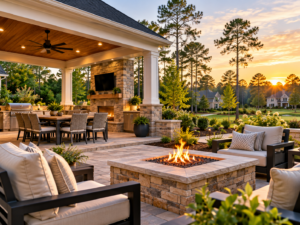
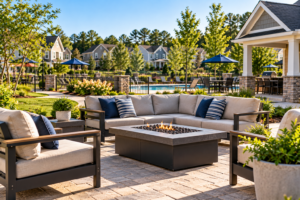
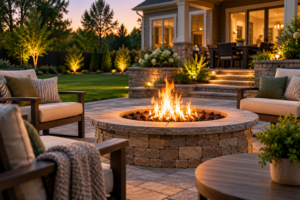
A fire feature is the single fastest way to turn a plain patio into a gathering spot. It extends usable outdoor time into cooler months and naturally pulls seating into a circle around it.
Whether it’s a built-in fire pit or a portable option, this is often the feature people remember most. Explore fire pit options built for exactly this kind of everyday use.
Lighting for Function and Nighttime Appeal
String lights, path lighting, and uplighting on trees or structures each serve a purpose. Function first (can you see the steps at night), then ambiance.
Shade Solutions Beyond Structures
Umbrellas, retractable awnings, and even strategically placed trees give you flexible shade that doesn’t require a full structure. Useful for smaller budgets or spaces that need shade in more than one spot.
Step 5: Furnish and Personalize the Space
This is where the space starts to feel like yours.
Choosing Durable, NC-Weather-Ready Outdoor Furniture
Material choice makes or breaks how long furniture lasts here. Poly lumber, aluminum, and teak each perform differently in our climate, and the comparison in poly lumber vs. aluminum vs. teak is worth reading before you buy anything.
Seating style matters too. If you’re deciding between plush comfort and easy-clean practicality, our guide to deep seating vs. sling furniture walks through the tradeoffs. Browse our full patio furniture collection, including pieces from Woodard, a brand known for craftsmanship that holds up outdoors.
Seasonal Plantings and Finishing Touches
A few well-placed perennials or flowering shrubs add color without heavy upkeep. Outdoor rugs, throw pillows, and planters bring the final layer of personality that makes the space feel finished.
Step 6: Plan for the Whole Family
A truly complete outdoor living space works for every member of the household, not just the adults hosting dinner. Building in a dedicated kids’ zone keeps everyone outside longer.
Play Areas and Playsets That Fit Your Layout
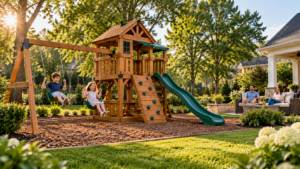
A play area doesn’t have to compete with your patio design. Positioned thoughtfully, it can sit within easy sightline of the main gathering space so kids stay close while parents relax. See our playsets built for real backyard use, and check out summer backyard ideas for families in the Pinehurst and Southern Pines area for more inspiration.
Step 7: How the Design-Build Process Actually Works
Most guides stop at inspiration. Here’s what actually happens once you decide to build.
Consultation, Design, and Permits in Moore County
A real project starts with a consultation to understand your goals, followed by a design phase where layout and materials get finalized. Depending on the structure, you may need a permit. Our post on permits for pergolas and pavilions in Moore County explains exactly when that applies.
What to Expect From Timeline to Completion
Once designs and permits are approved, materials get ordered and a build schedule is set. Timelines vary by project size and season, but knowing the steps in advance means fewer surprises. You can see our full process and team or reach out to start a conversation about your project.
How Much Does an Outdoor Living Space Cost?
Costs vary widely by feature, material, and size, but most homeowners build in phases. Starting with a patio and one or two comfort features keeps a project manageable before expanding further.
| Feature | Typical Investment Range |
| Patio (pavers or concrete) | Entry-level to mid-range, varies by material |
| Pergola or gazebo | Mid-range, varies by size and materials |
| Fire pit or fire feature | Entry-level to mid-range |
| Outdoor furniture set | Entry-level to premium, varies by brand and material |
| Play area or playset | Mid-range, varies by size |
Exact numbers depend on your yard, materials, and scope. The best way to get a real figure for your space is a free consultation and quote.
Frequently Asked Questions
How long does an outdoor living space project take?
Smaller projects like a patio and fire pit can take a few weeks. Larger builds with structures or an outdoor kitchen typically take one to three months, depending on permits and season.
Should I DIY or hire an outdoor living contractor?
Simple additions like furniture and plantings work well as DIY projects. Structures, hardscaping, and anything requiring permits are safer and more cost-effective with a professional contractor.
What should I budget for first?
Start with the foundation, your patio or deck, before adding structures or furniture. A solid, well-planned base makes every feature added later fit together properly.
Can I add features to my outdoor space over time?
Yes. Many homeowners build in phases, starting with a patio and expanding with a fire feature, structure, or furniture as budget allows. Planning the full layout early makes future additions easier.
Bring Your Outdoor Space to Life With GreyFox Outdoor
You now have the full roadmap, from assessing your yard to understanding real costs and timelines. The next step is seeing what’s possible for your own space.
Browse real transformations in our project galleries, or visit GreyFox Outdoor to explore everything we offer for Southern Pines and Sandhills homeowners.
Ready to start planning? Request your quote today and let’s design an outdoor space you’ll actually want to live in.